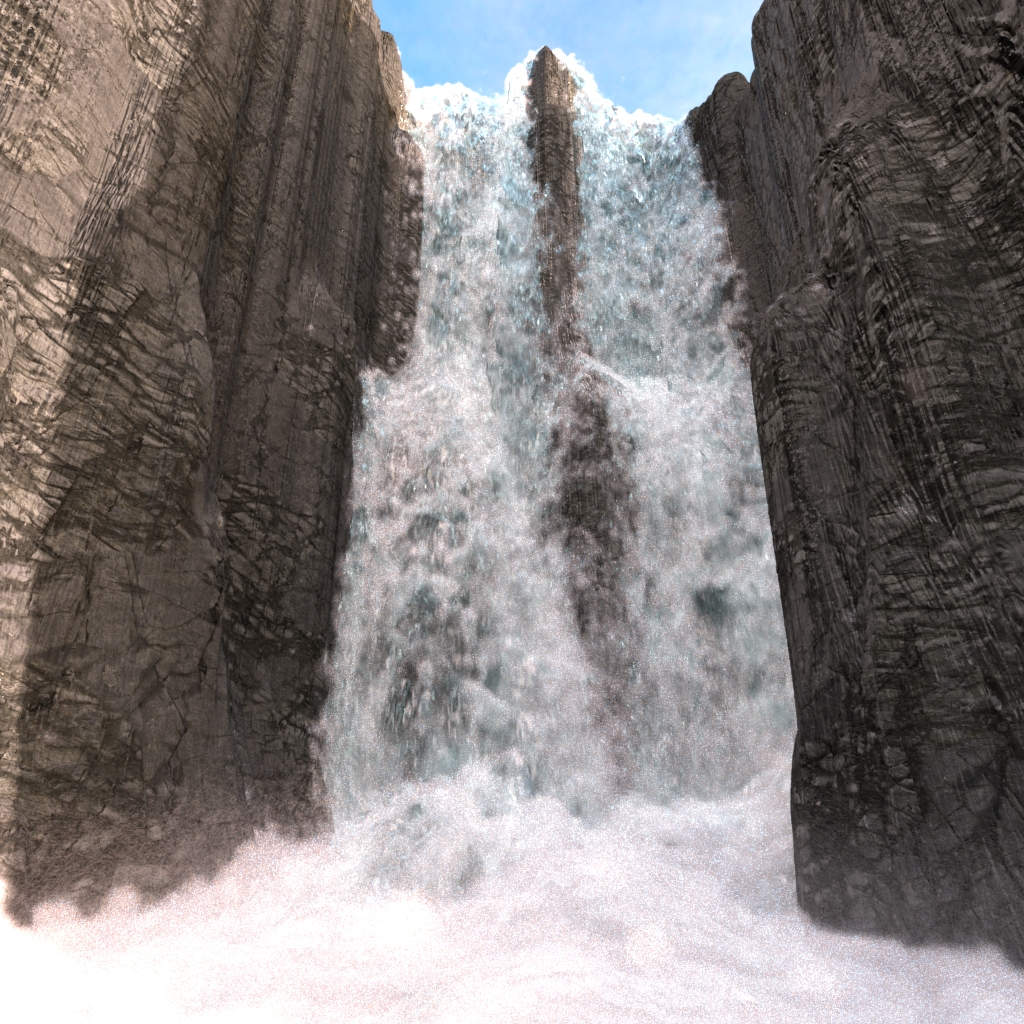
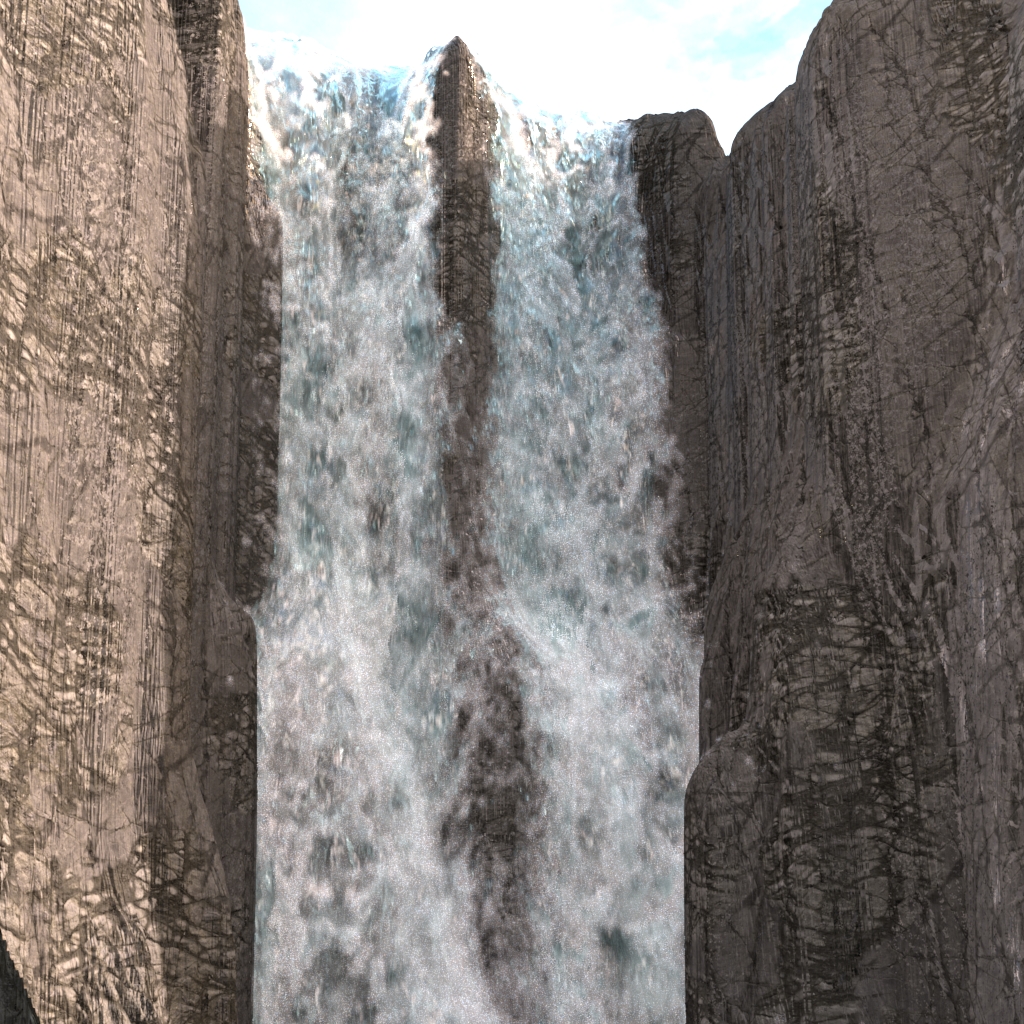
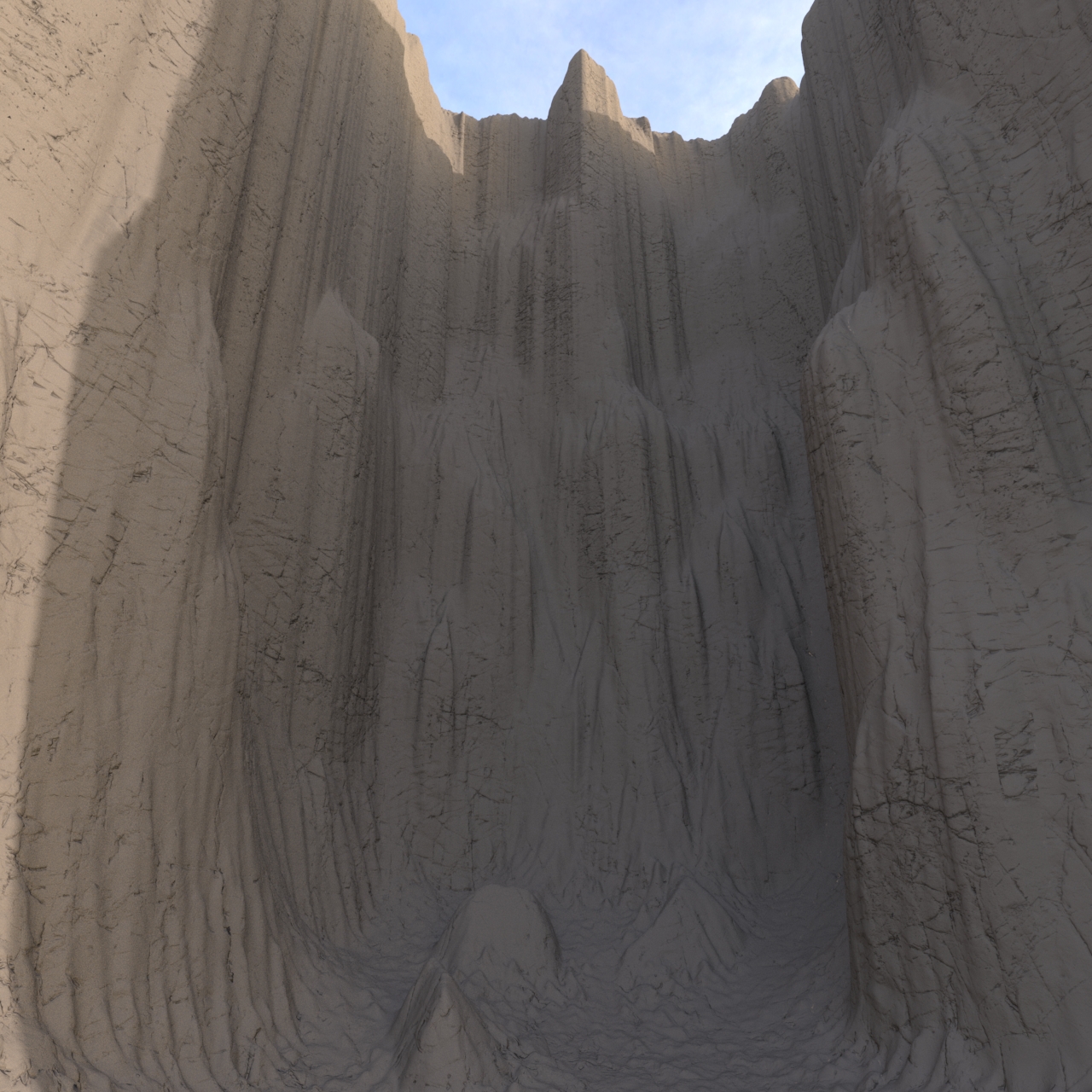
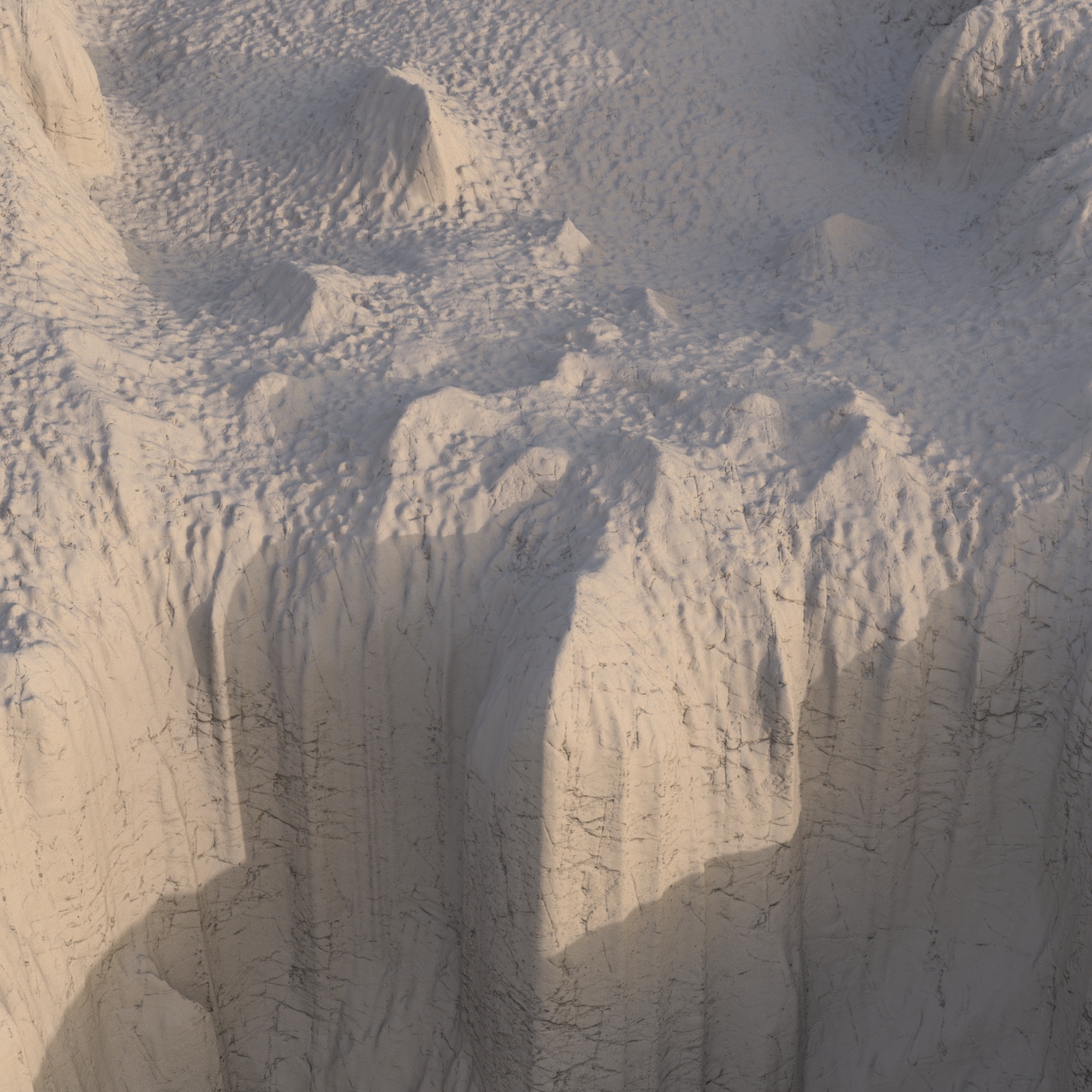
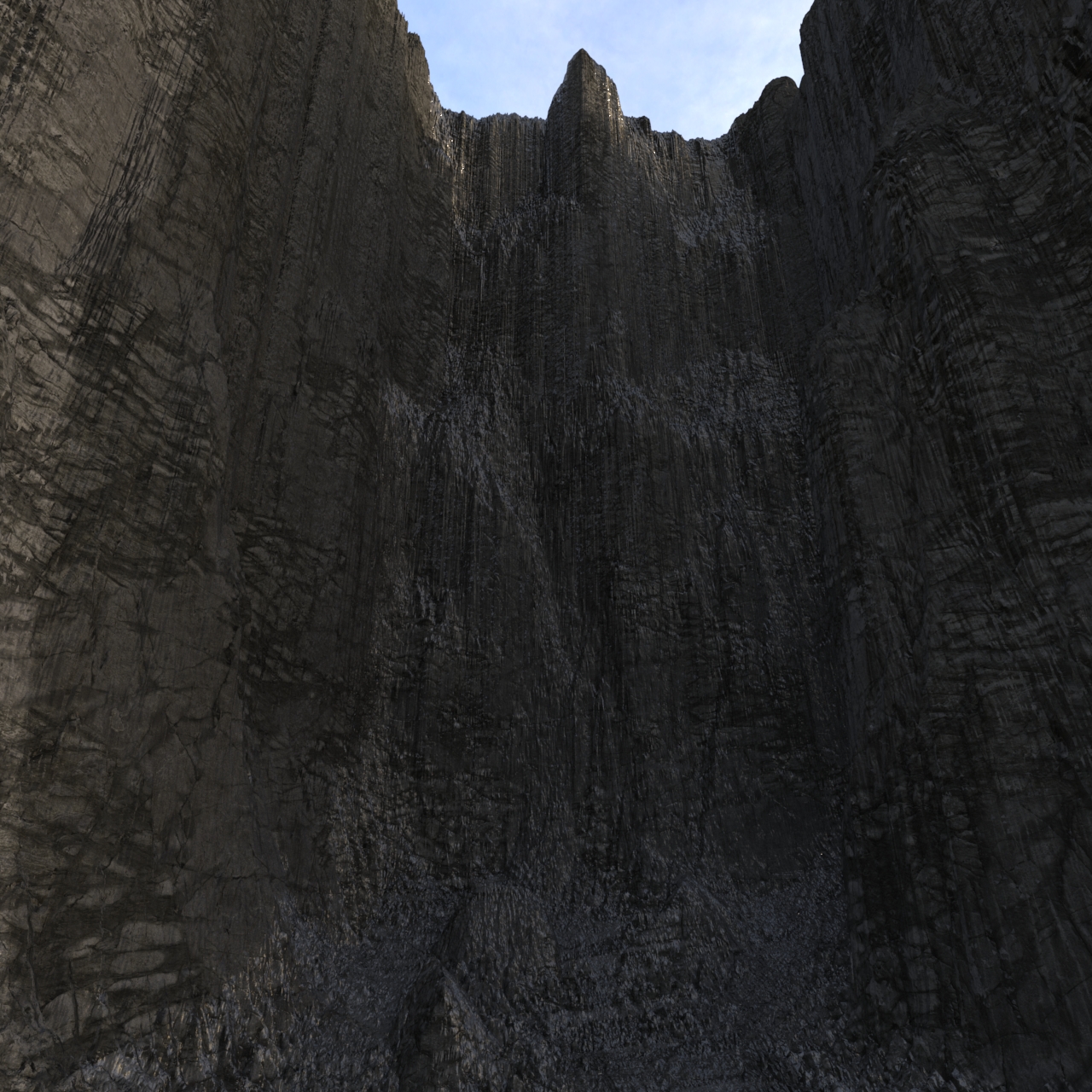
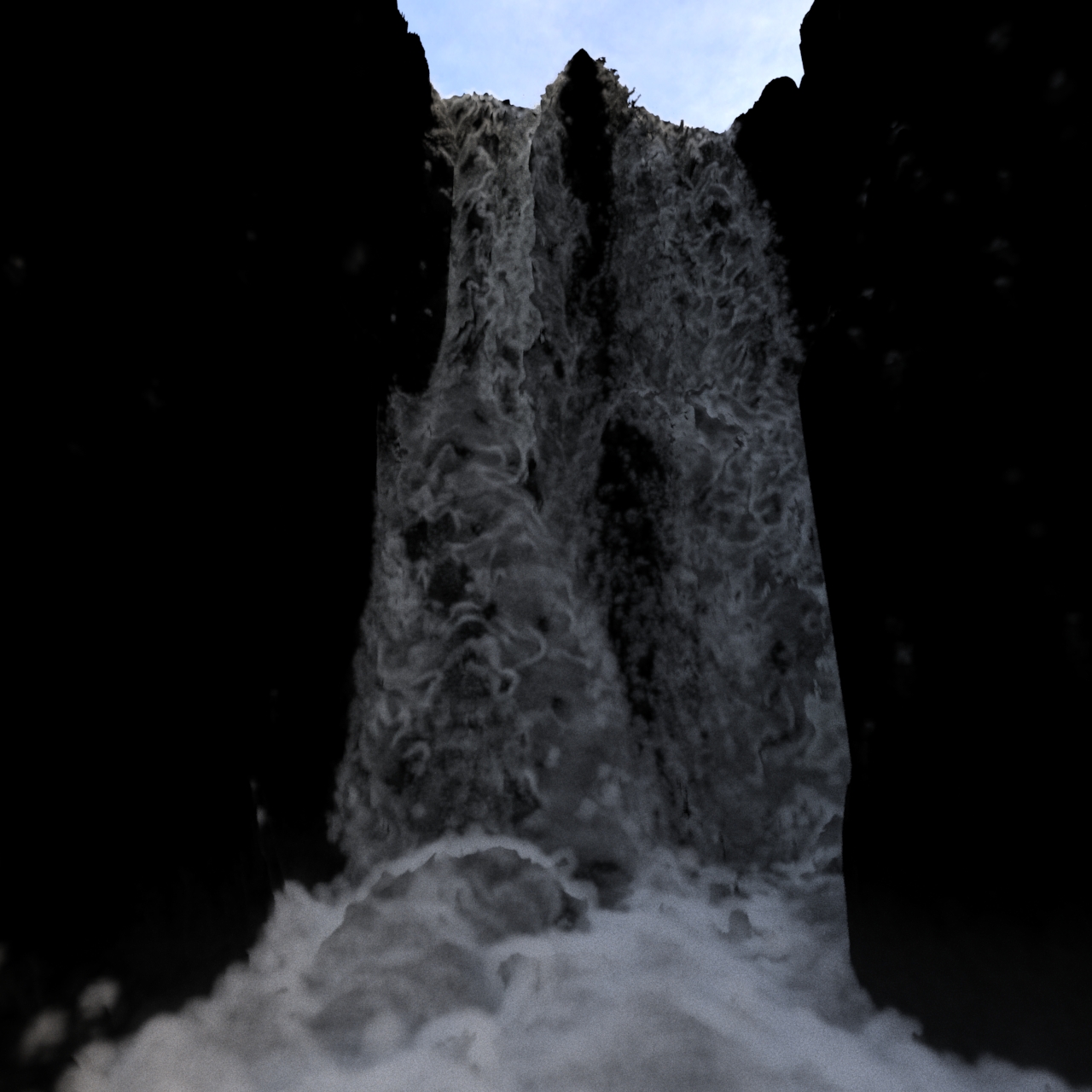
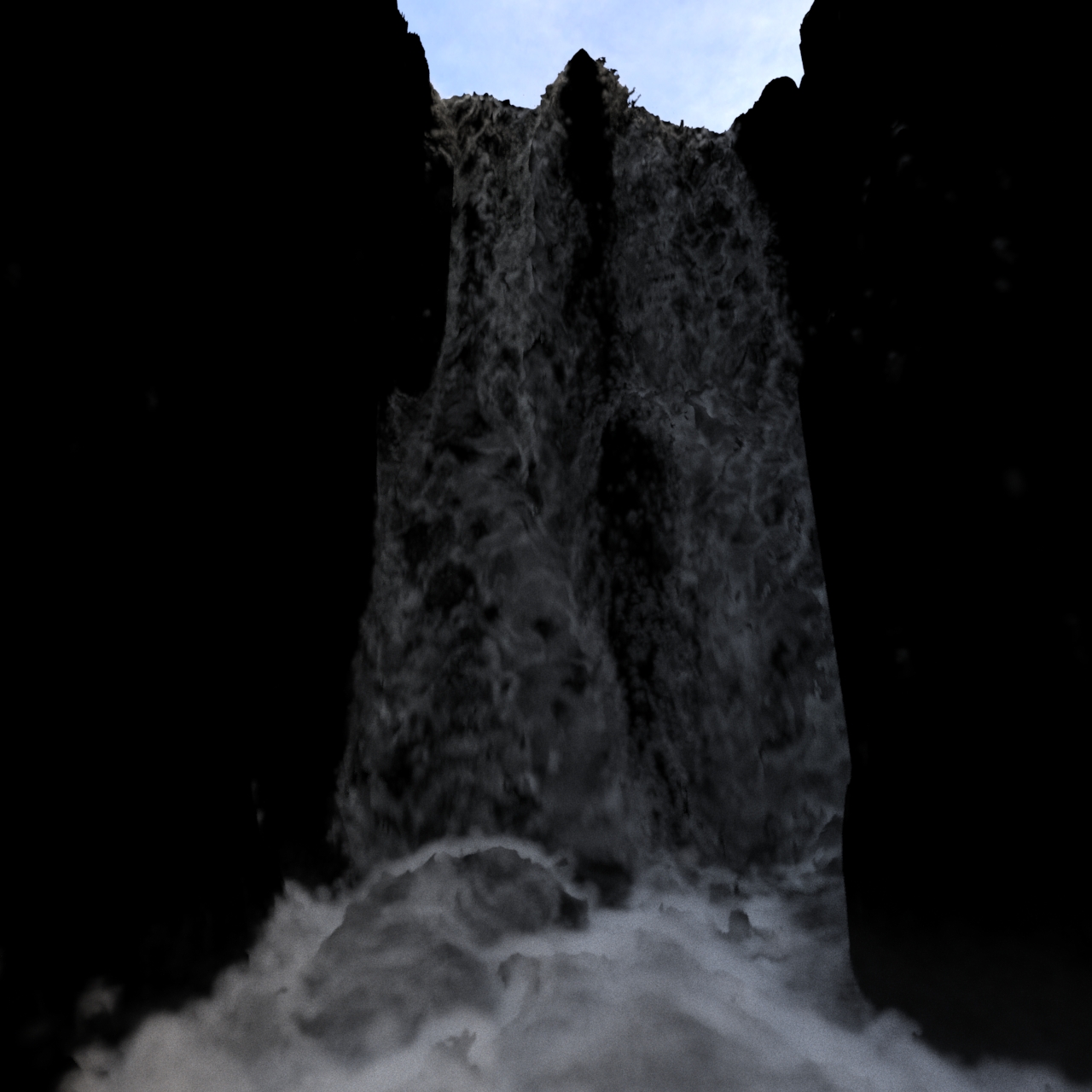
waterfall
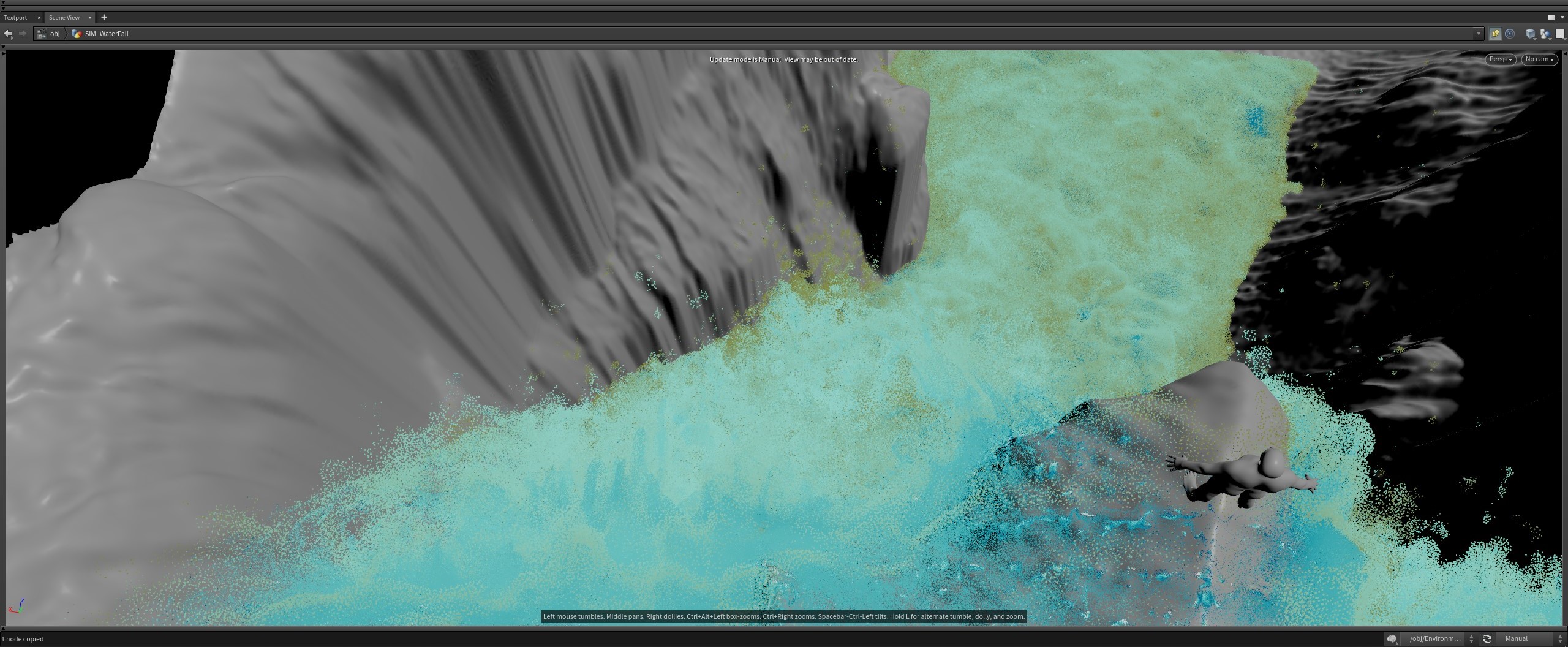
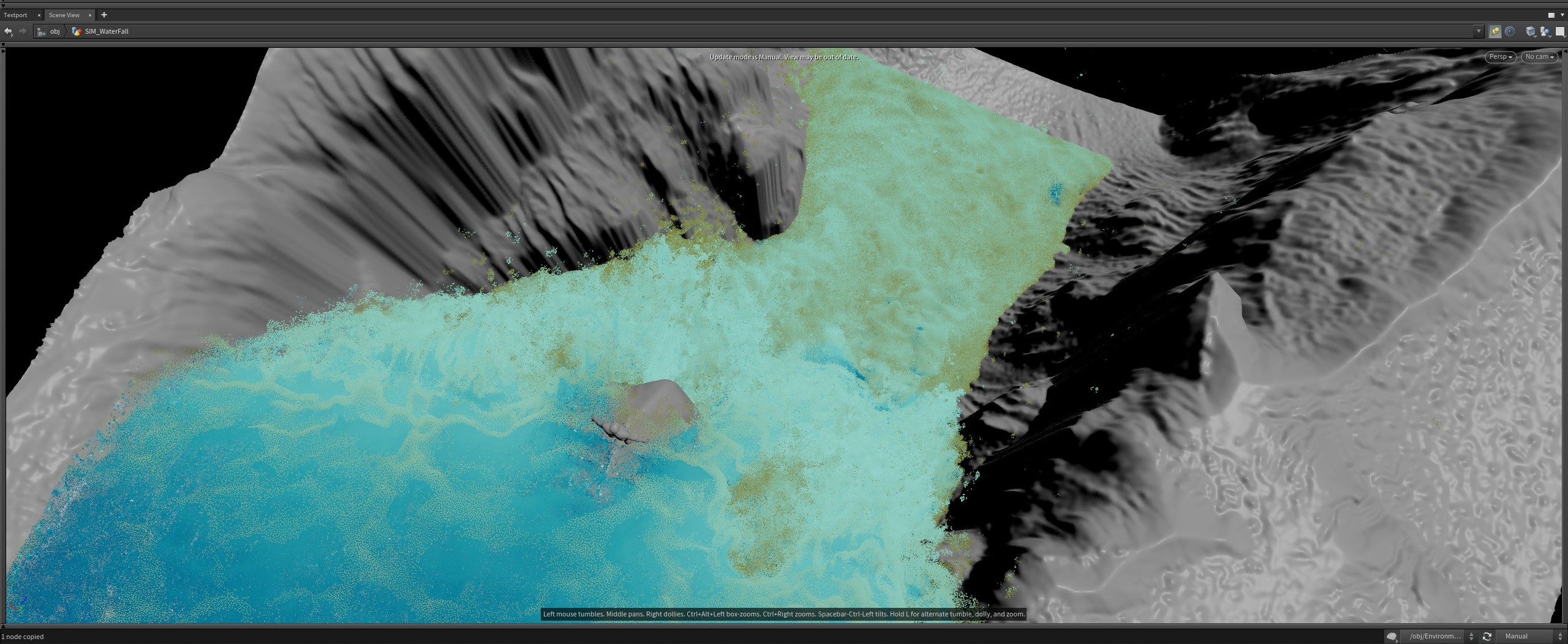
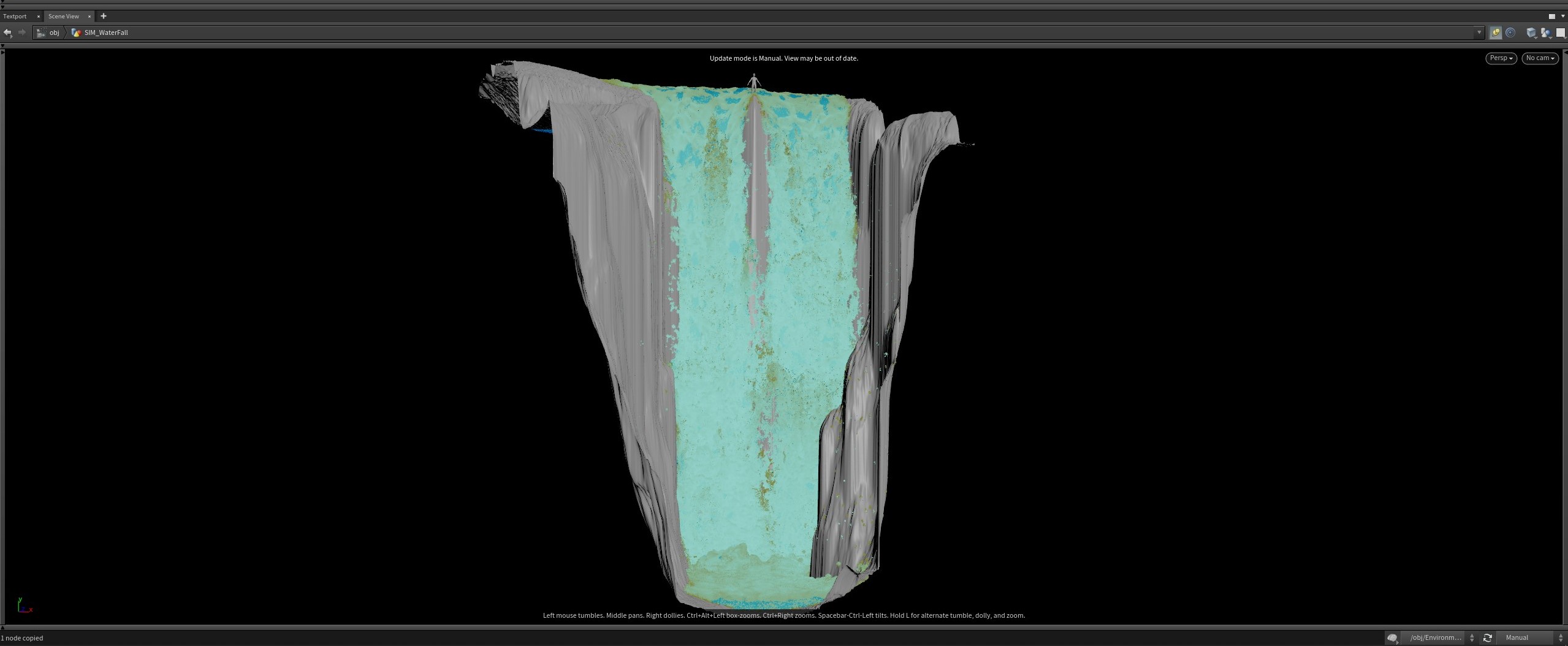
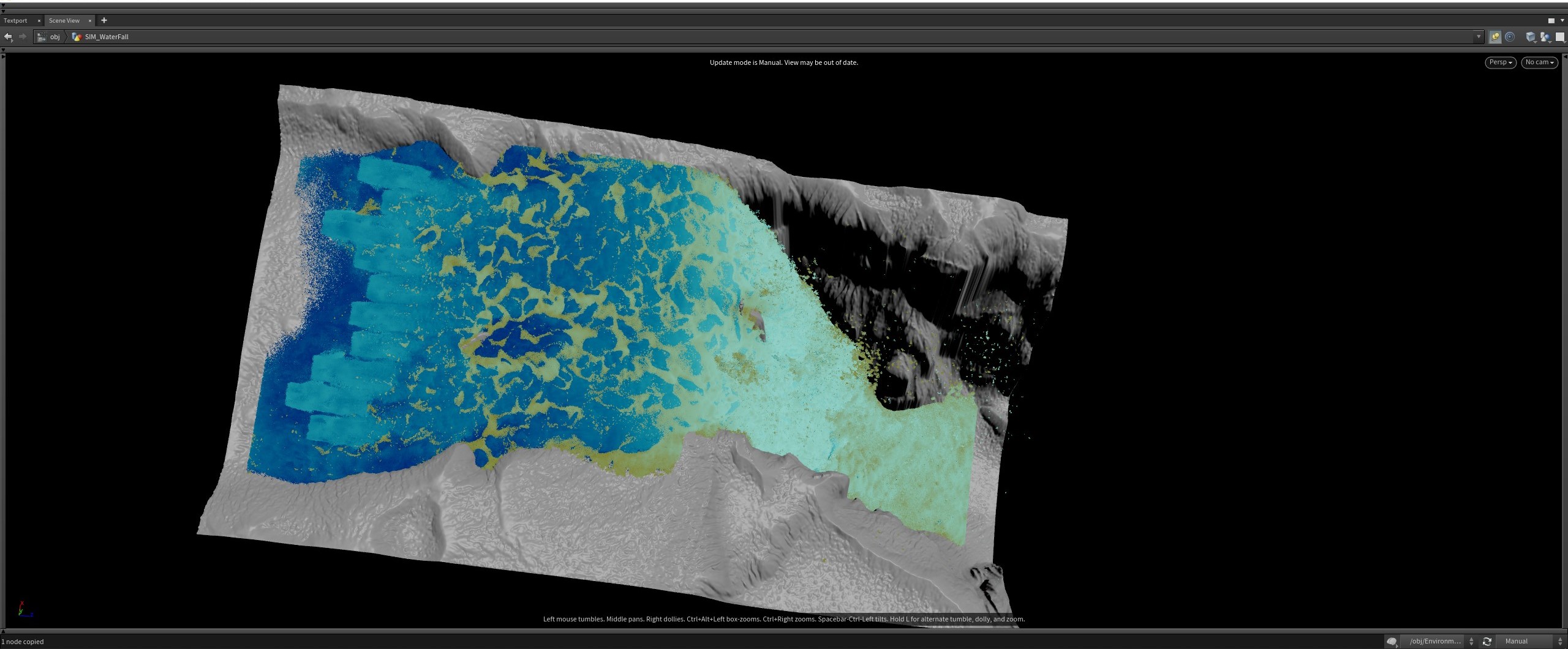
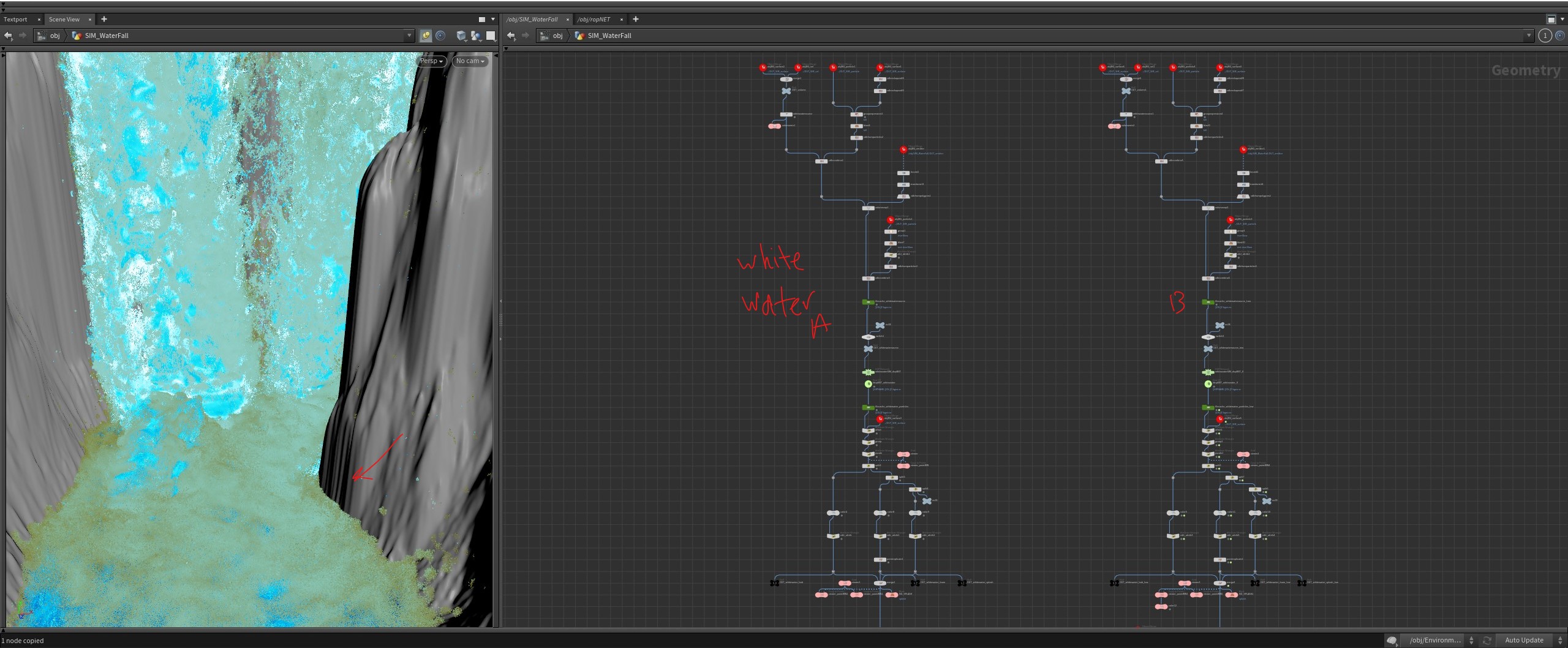
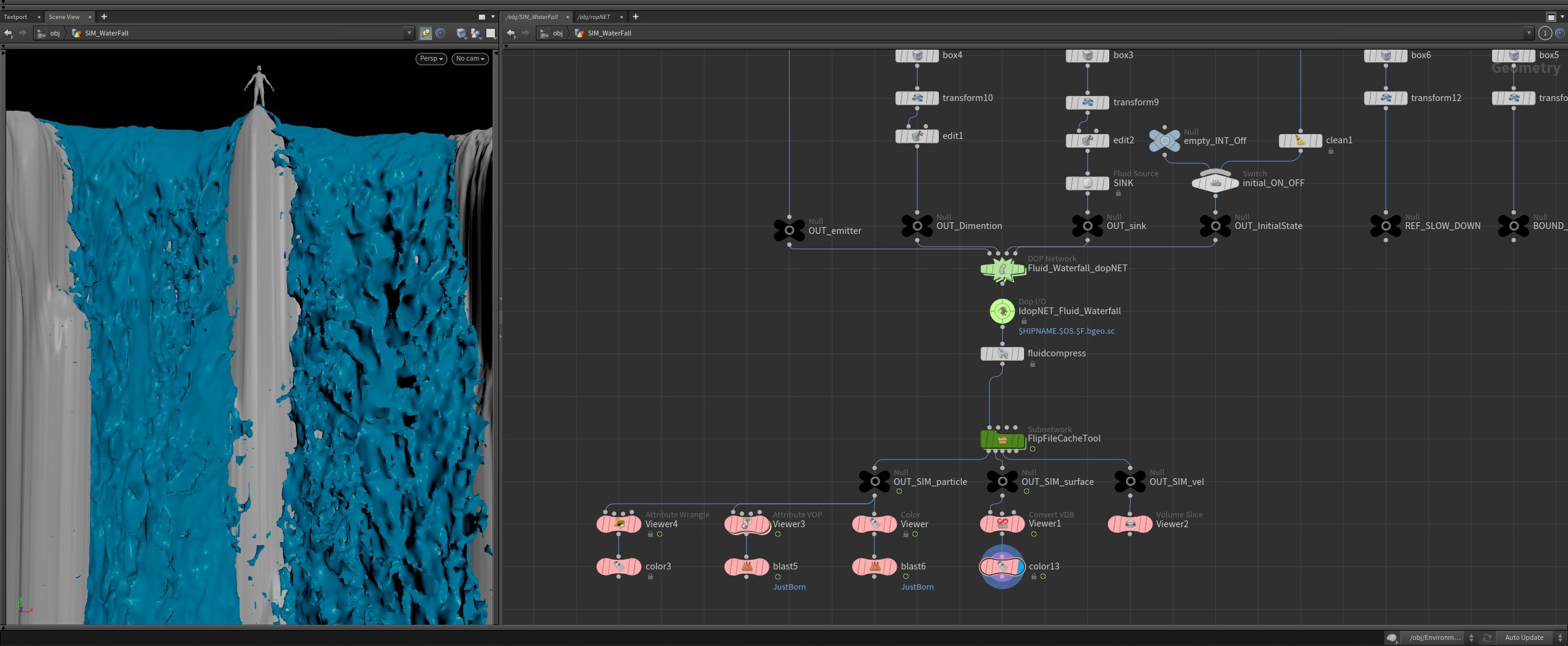
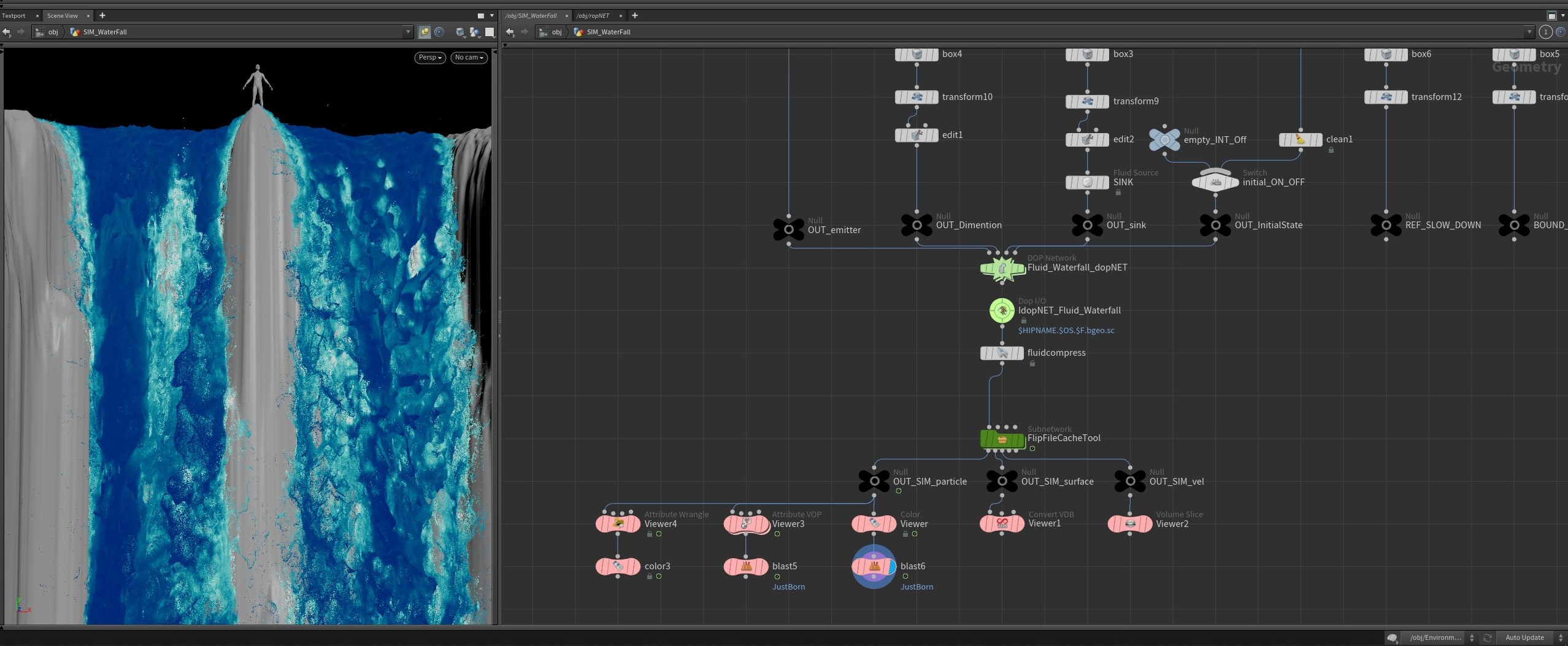
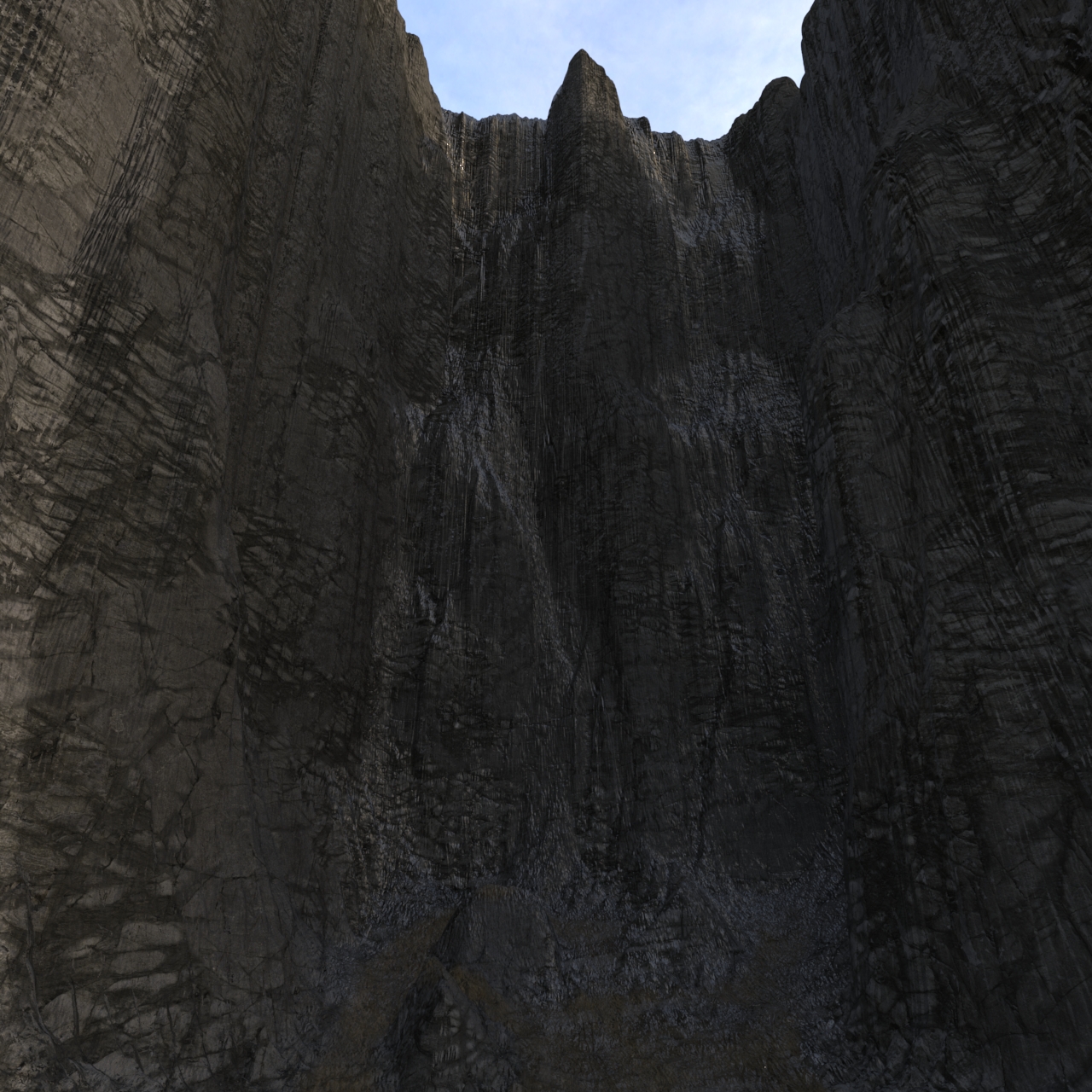
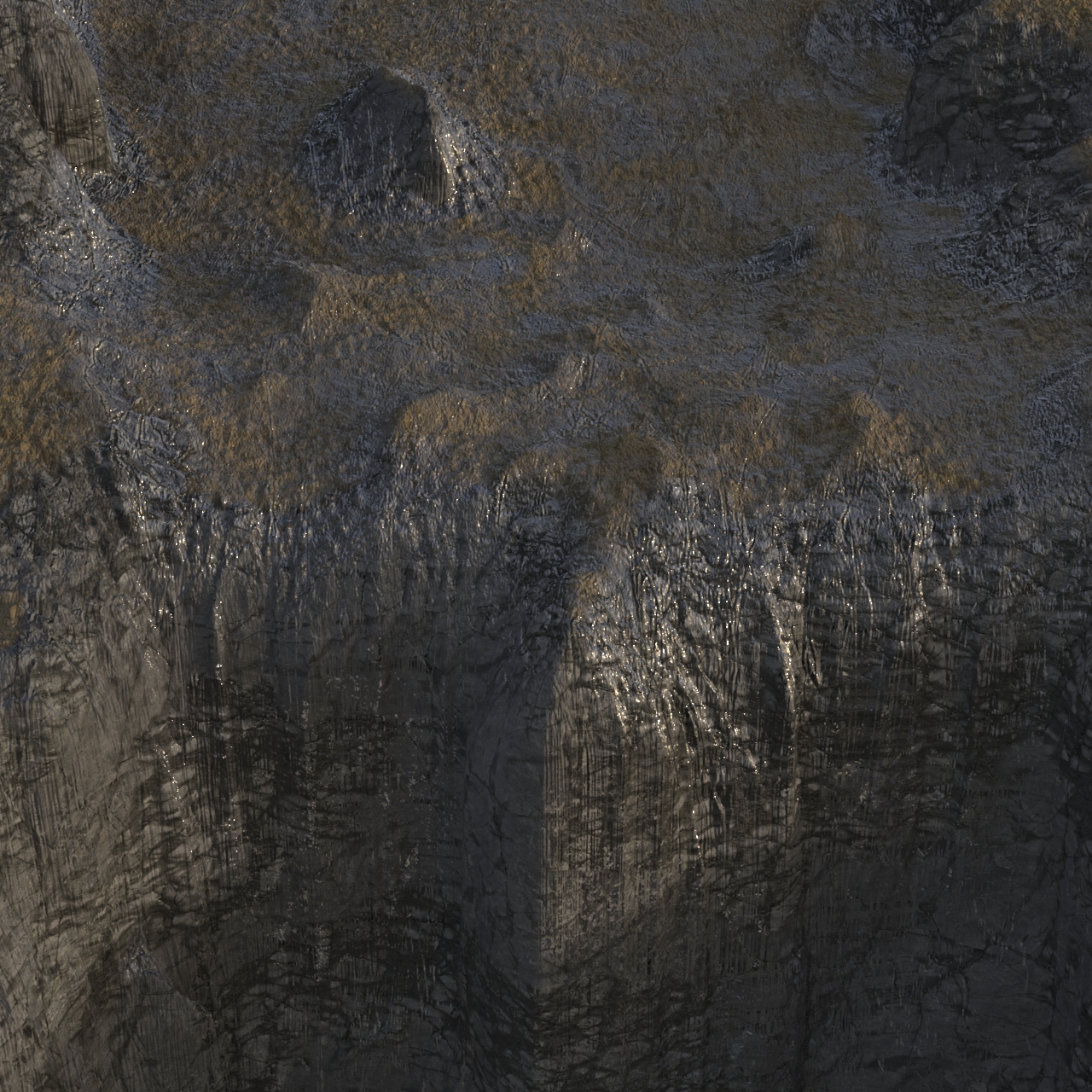
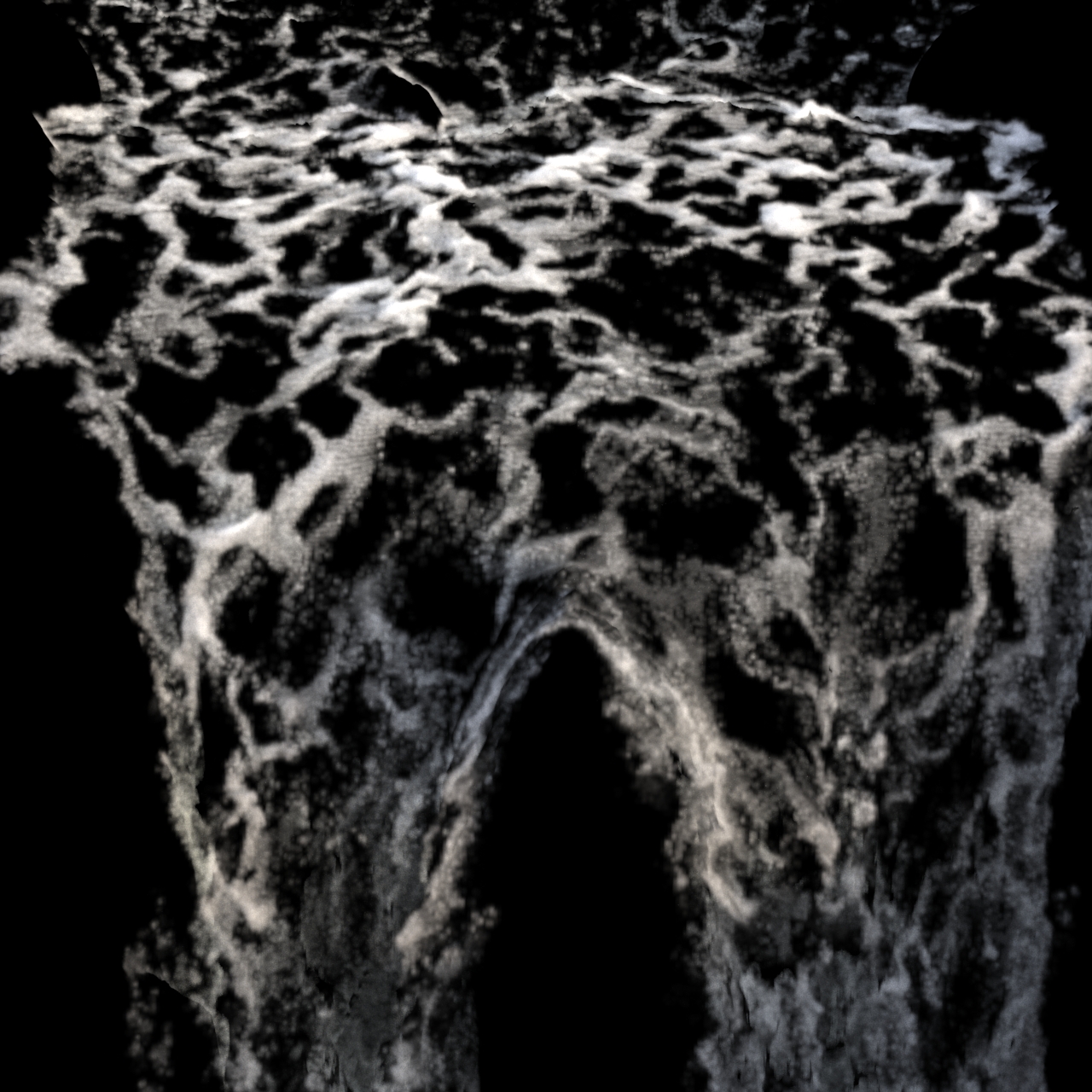
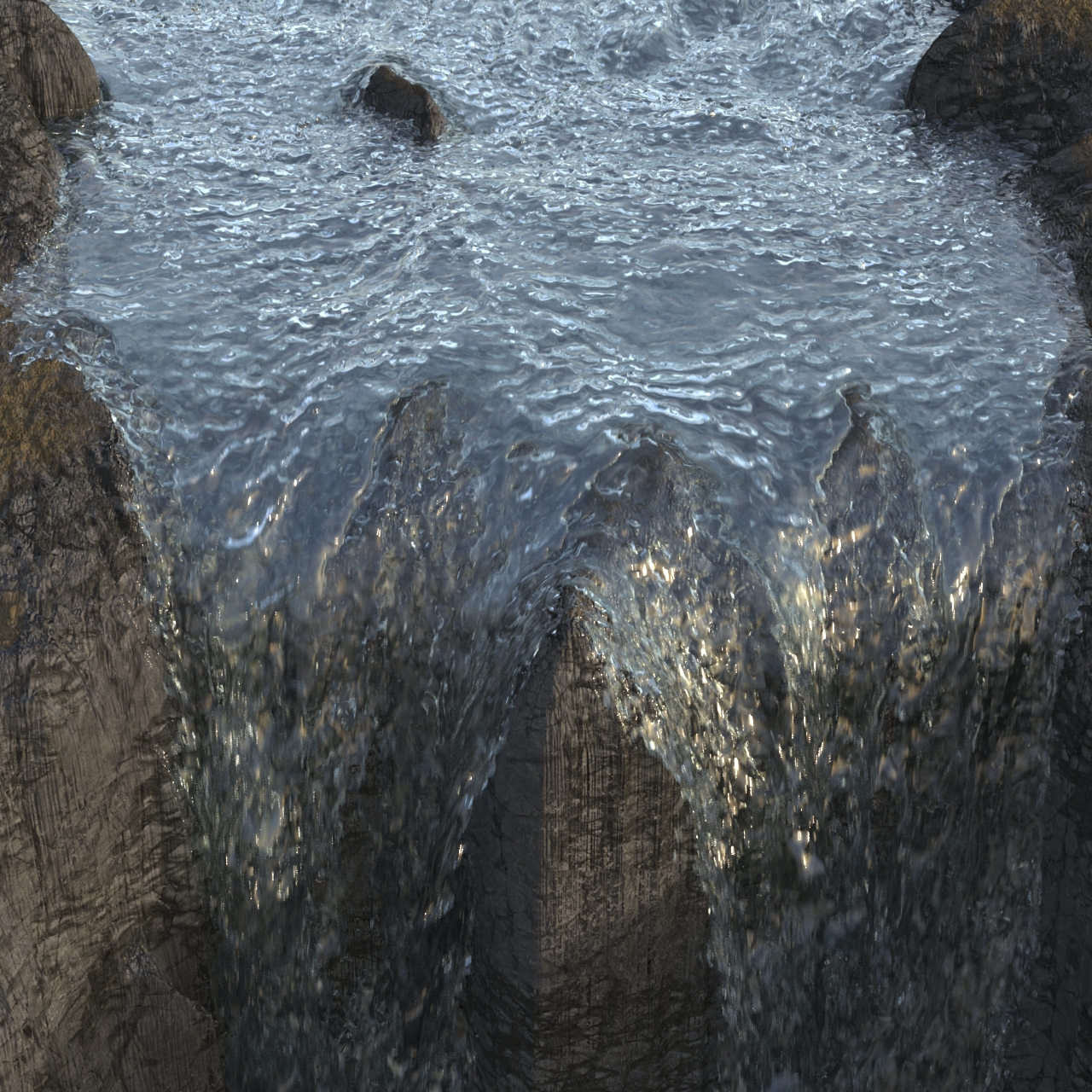
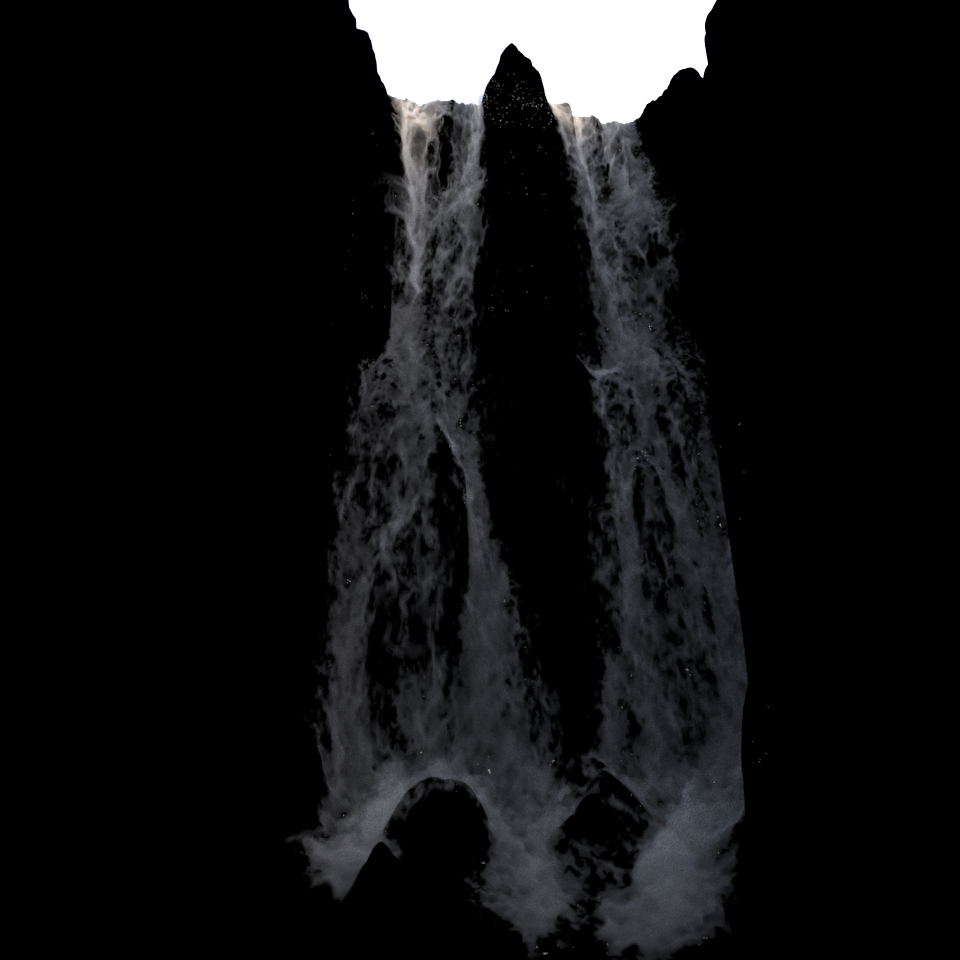
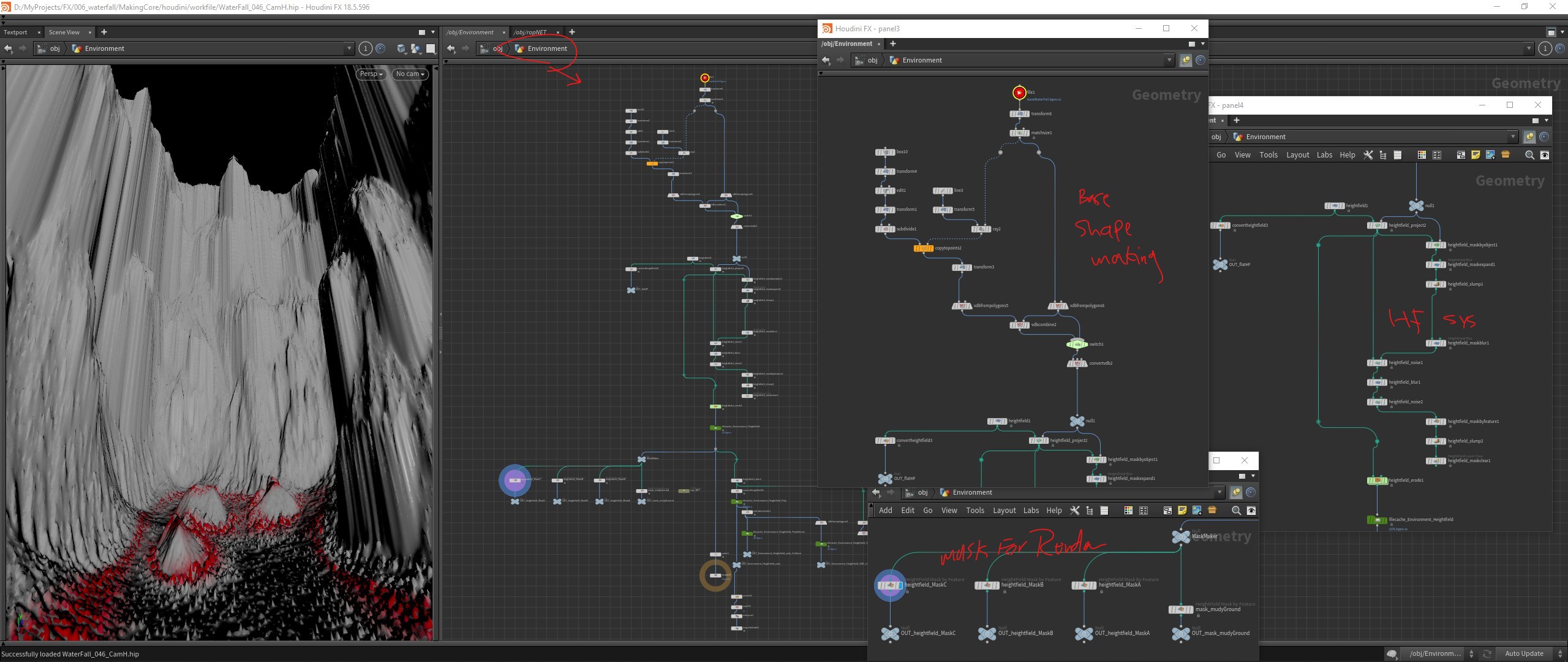
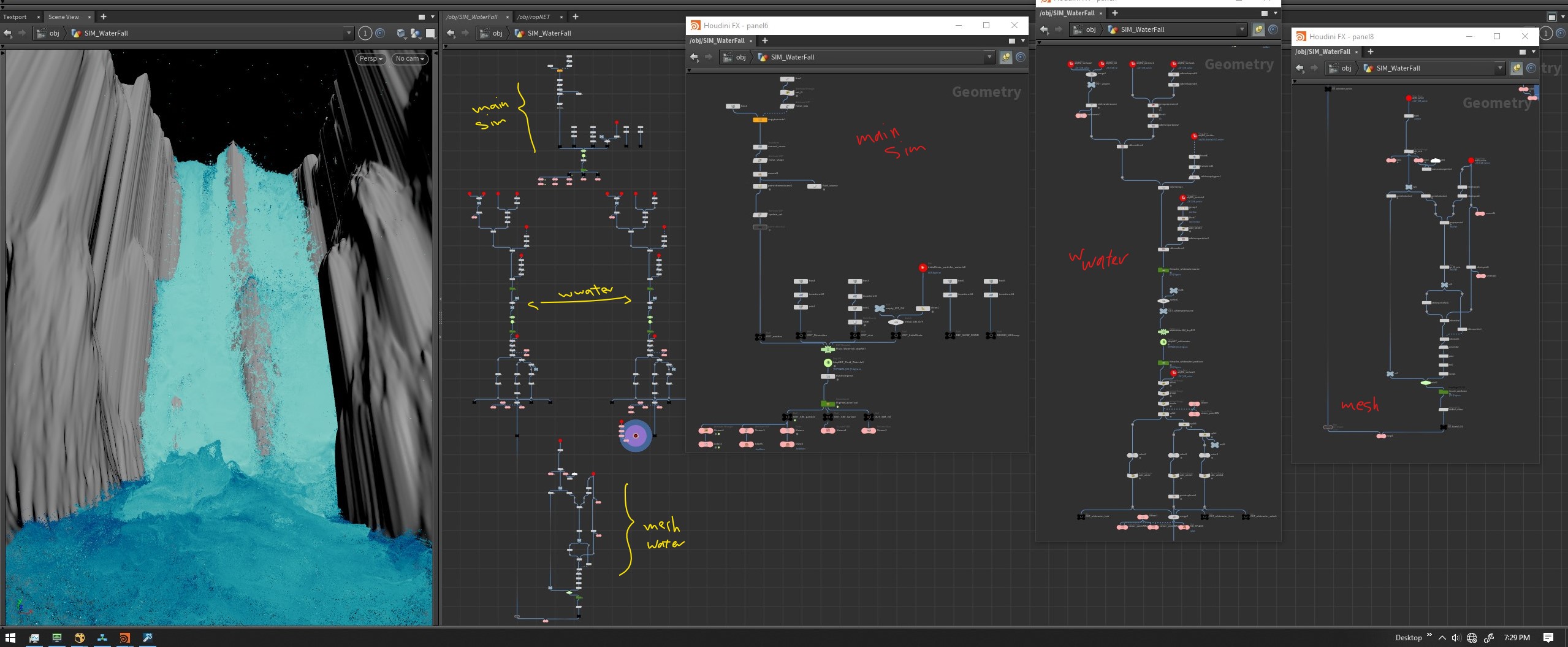
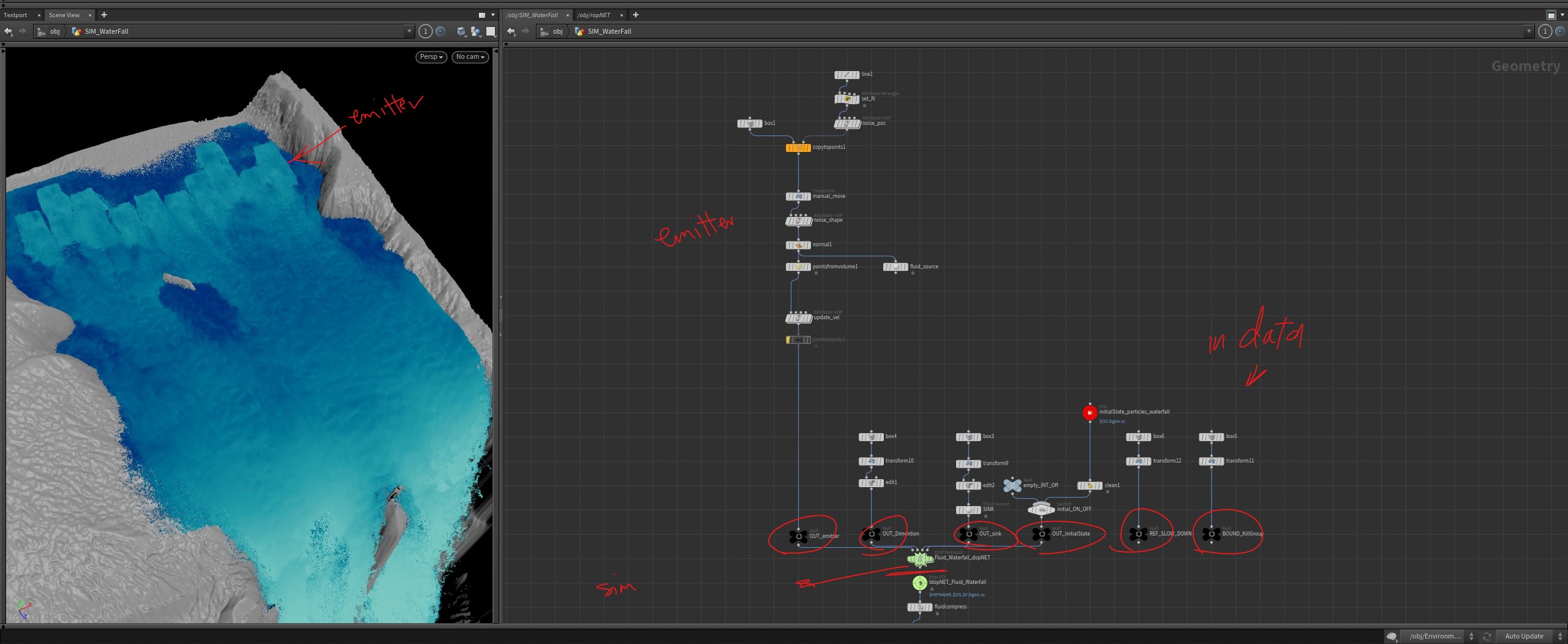
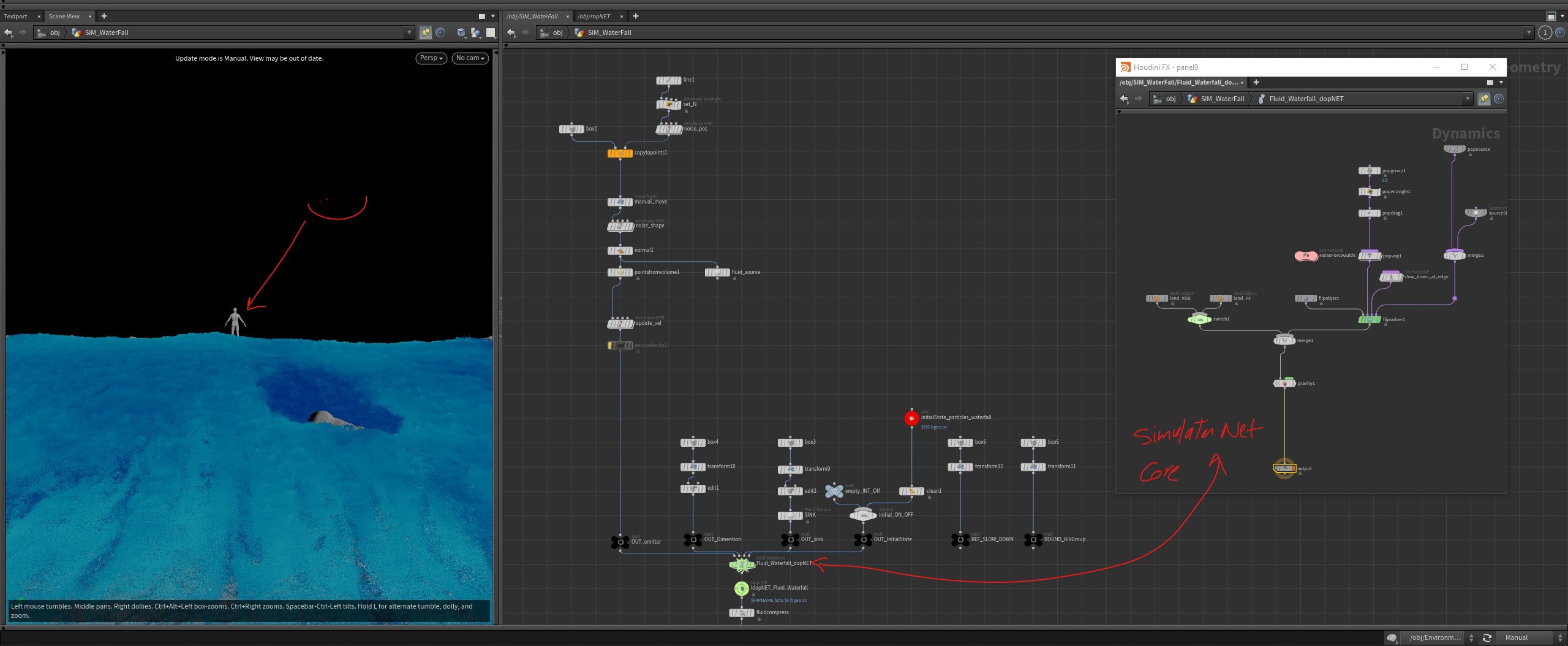
The main goal of this R&D was to solve a large-scale FX simulation challenge using a full Houdini FLIP fluid workflow, including wet maps, whitewater, spray, and mist.
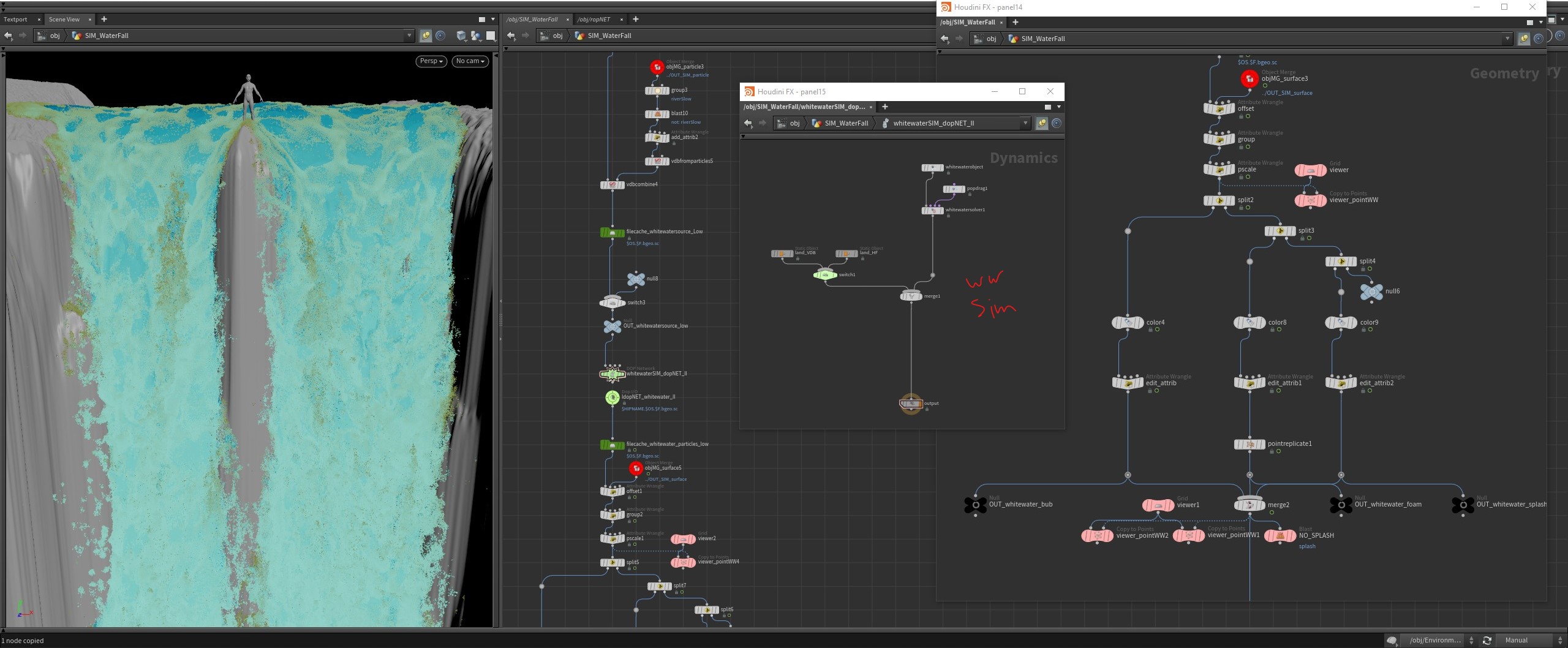
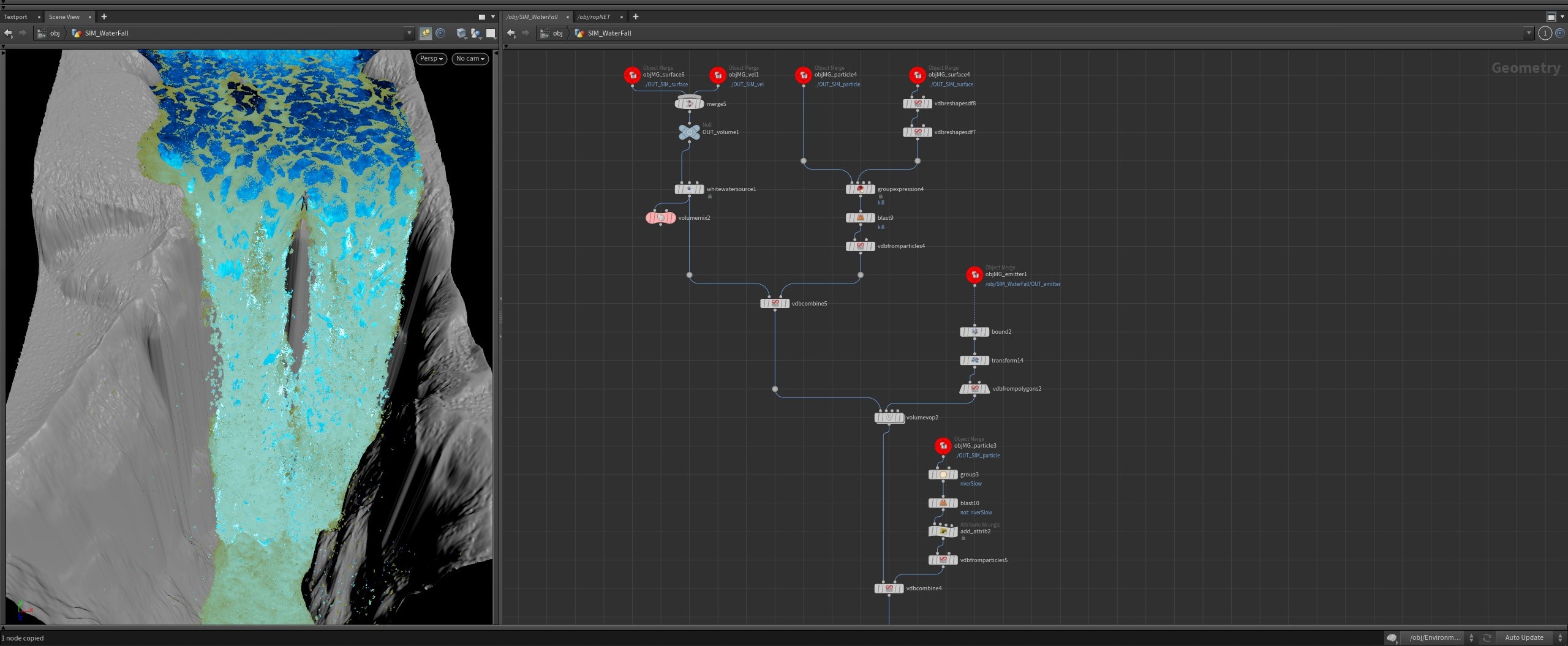
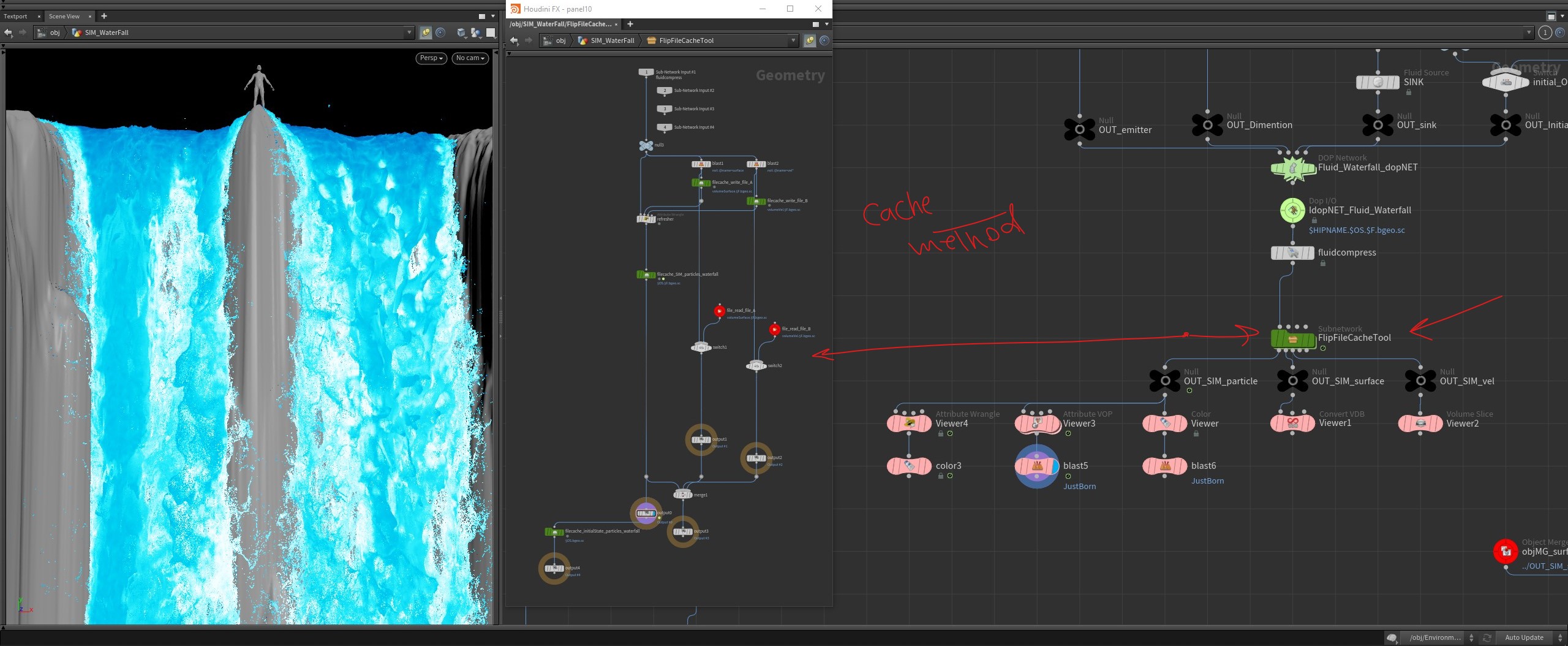
My main focus was on the technical setup, data management, and simulation efficiency, especially under a limited RAM and VRAM budget. Because of the scale of the waterfall, the challenge was not only generating enough particles, but also controlling how the simulation data was created, cached, processed, and submitted through the pipeline.
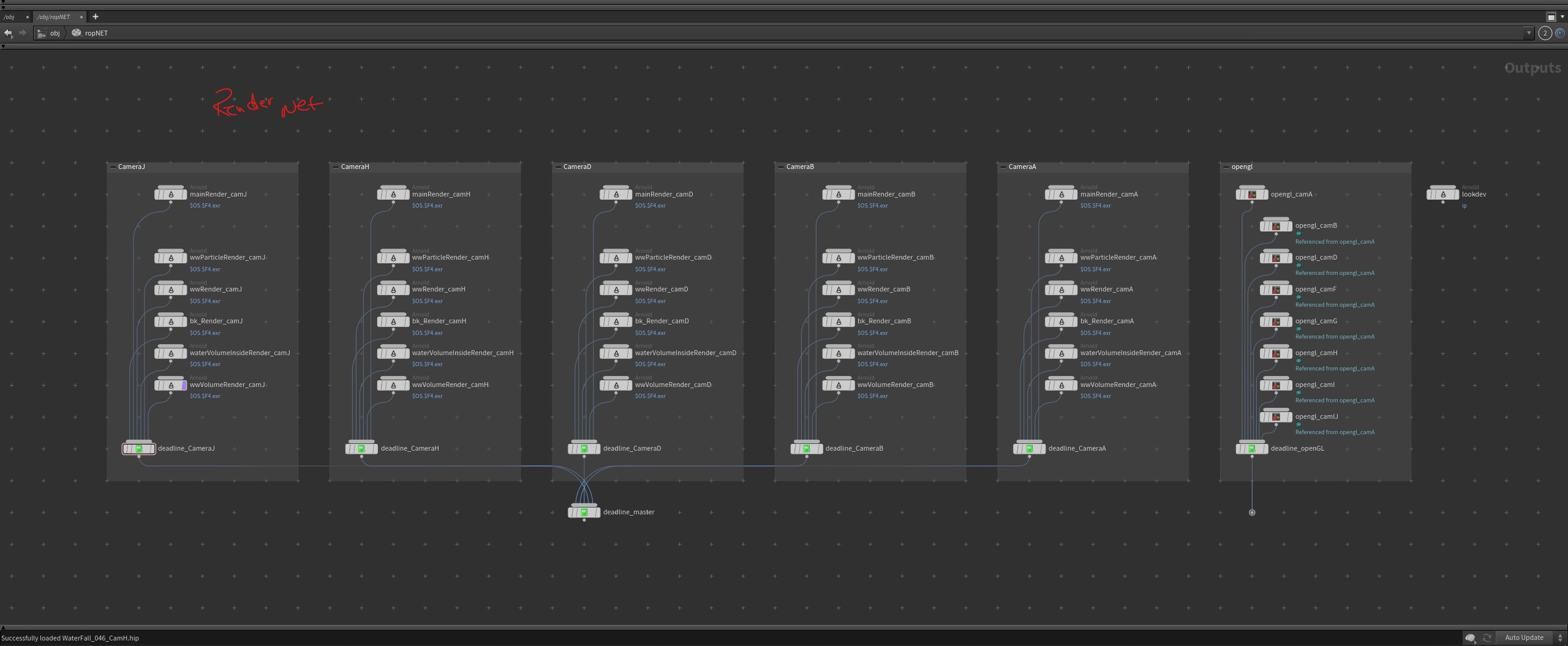
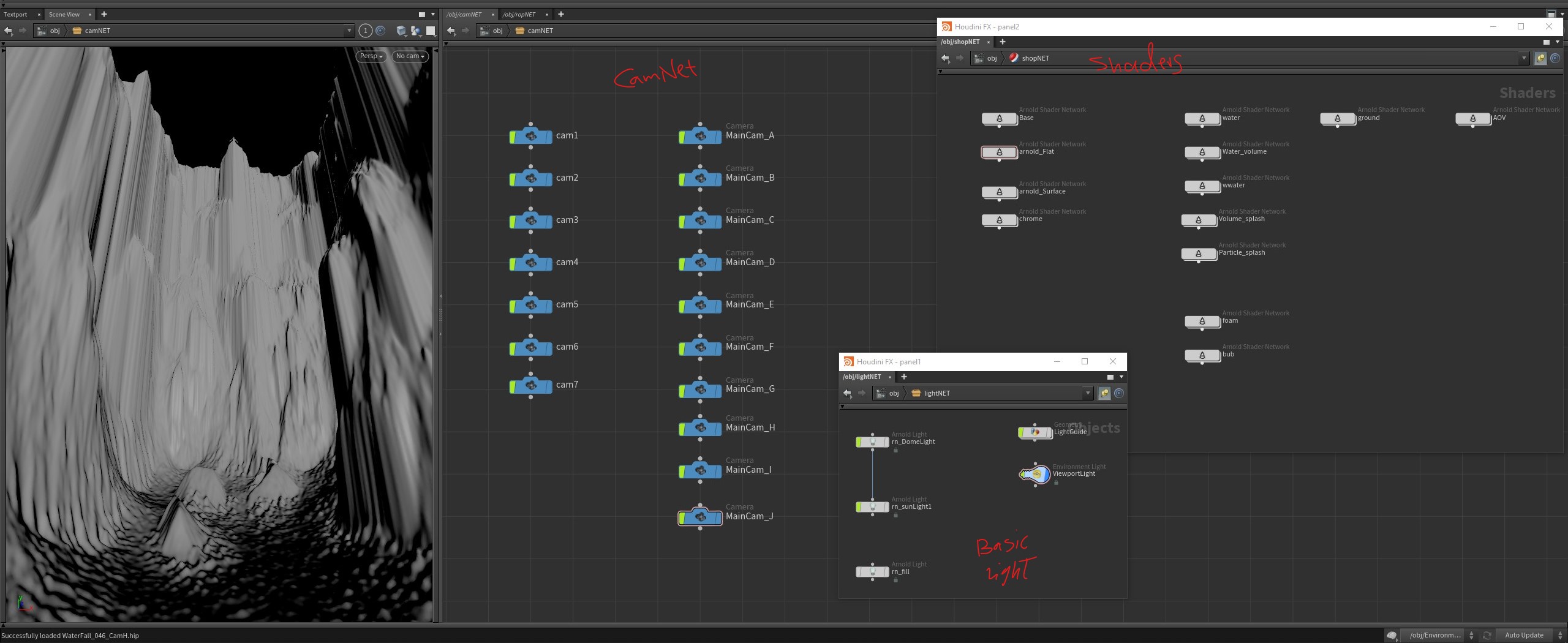
I developed particle masks and custom solver logic to control different regions of the simulation, manage collision behavior, and handle simulation dependencies more efficiently. I also worked on automation for the full process, from preview simulations and caching through to final render submission.
A major part of the work was finding a way to make the simulation detailed enough for the final shots while still keeping it practical on machines with limited memory. This required extensive testing to understand the hardware limits and determine how much particle density and simulation detail could be supported reliably.
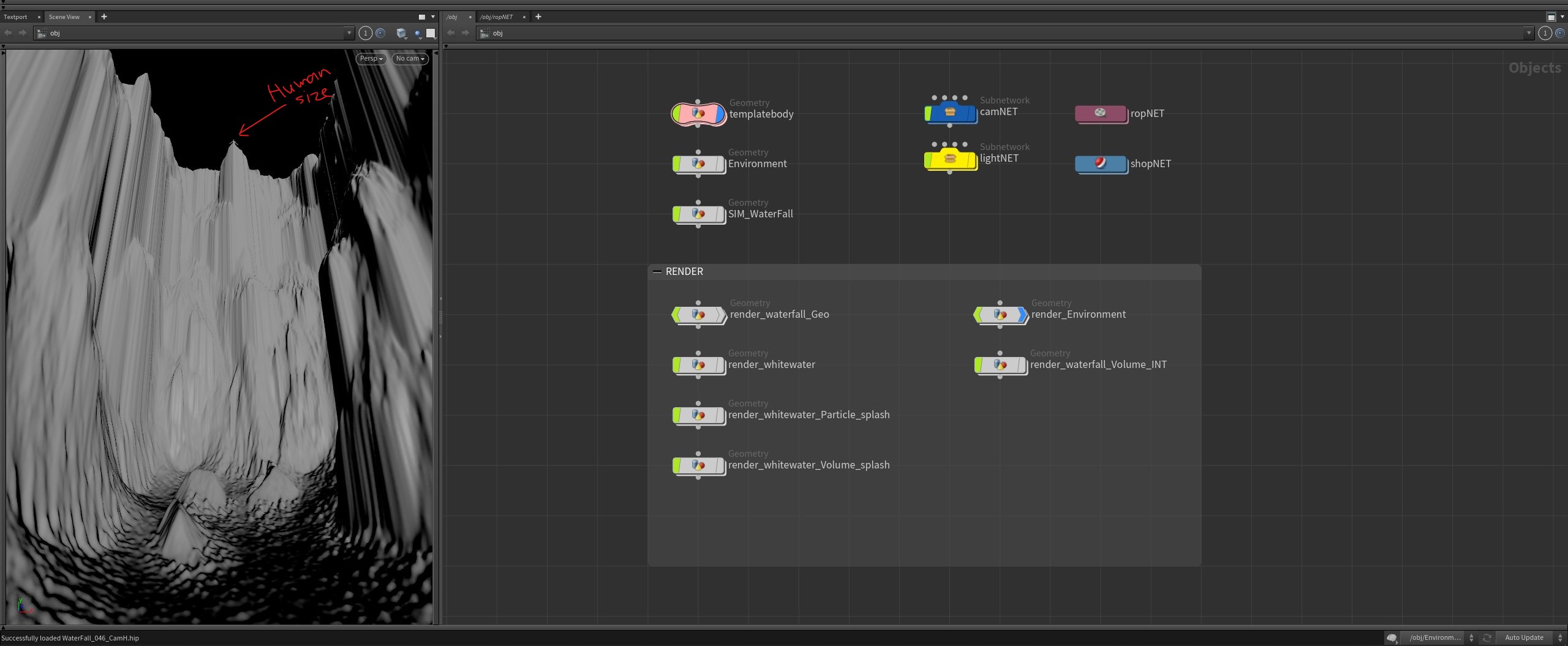
Based on the camera distance, framing, and final render resolution, I could then define the level of simulation detail required for each shot rather than using the same density everywhere.
The overall goal was to build a scalable and production-friendly workflow for a super-massive waterfall, preserving the benefits of a true FLIP simulation while keeping the memory footprint, cache size, and processing cost under control.