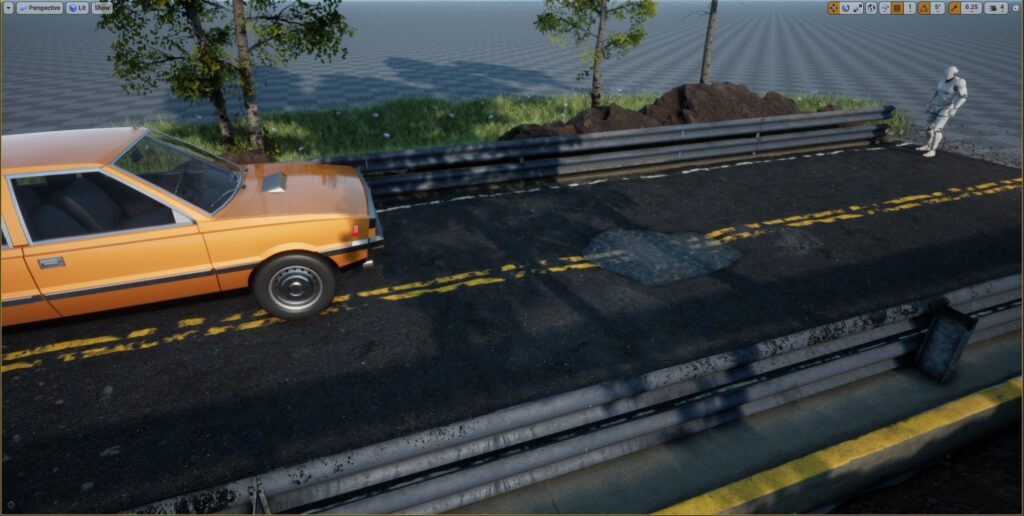
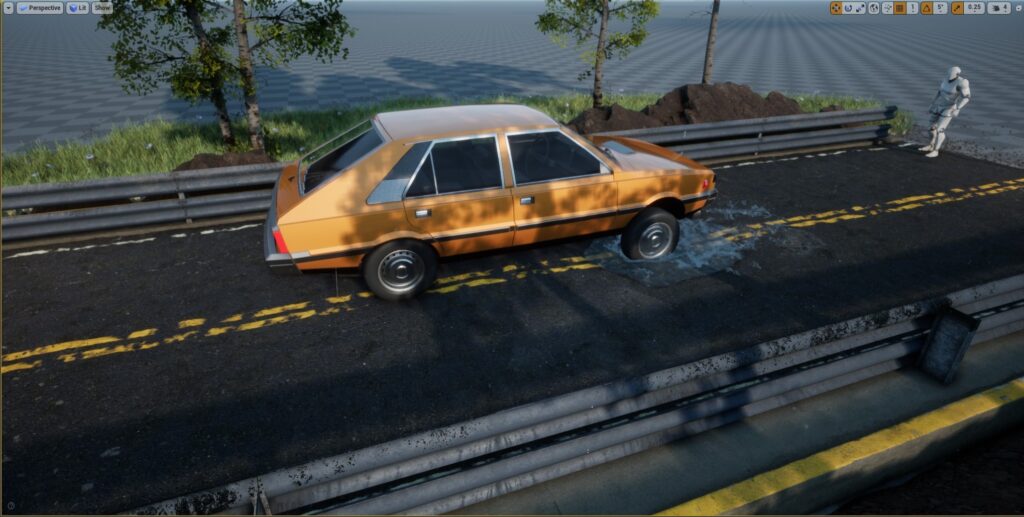
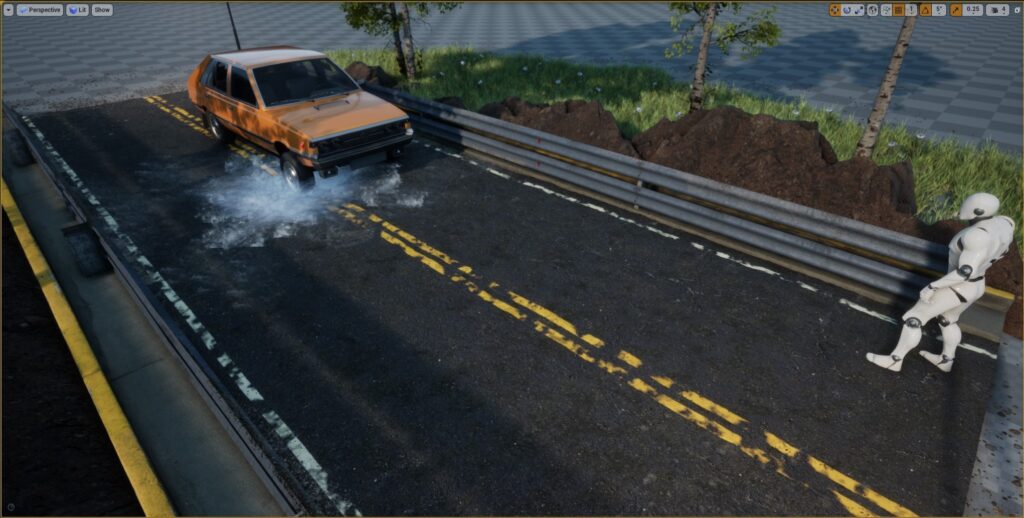
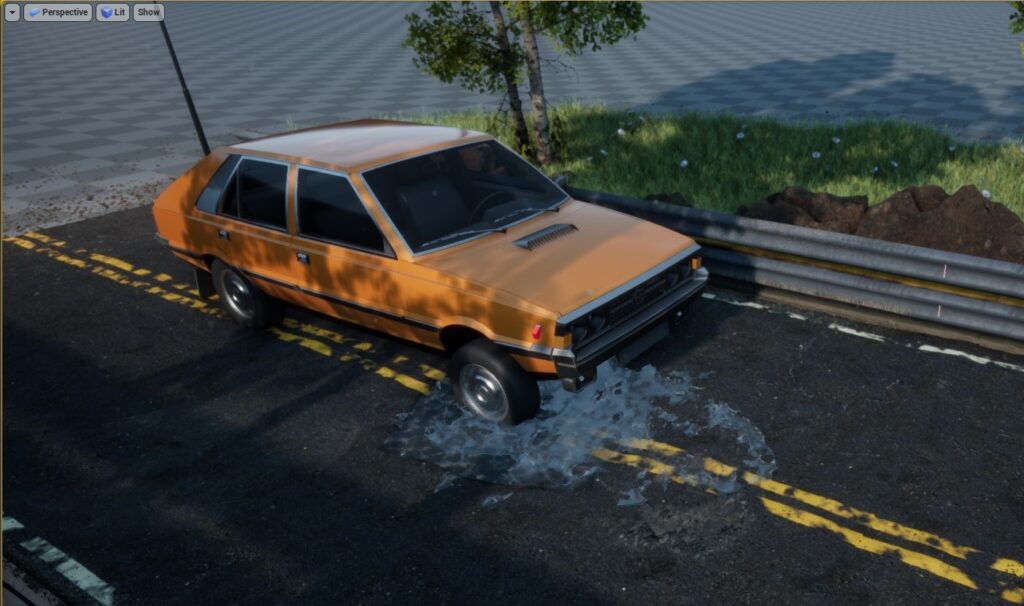
splash Effects
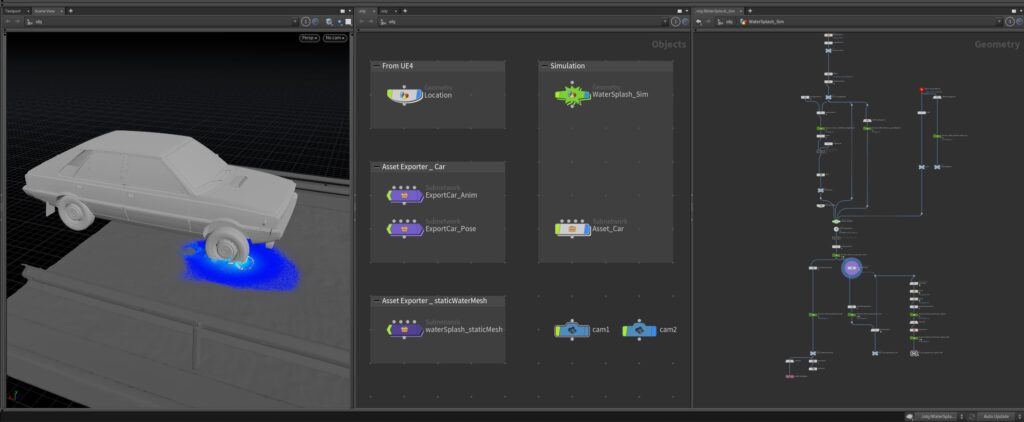
In this case, I used a combination of VAT (Vertex Animation Textures) and texture flipbooks to bring pre-simulated water splashes into the game engine.
The splash animation speed and playback timing can be controlled directly in the engine, which makes this workflow especially useful for cinematic shots or gameplay events that require precise timing.
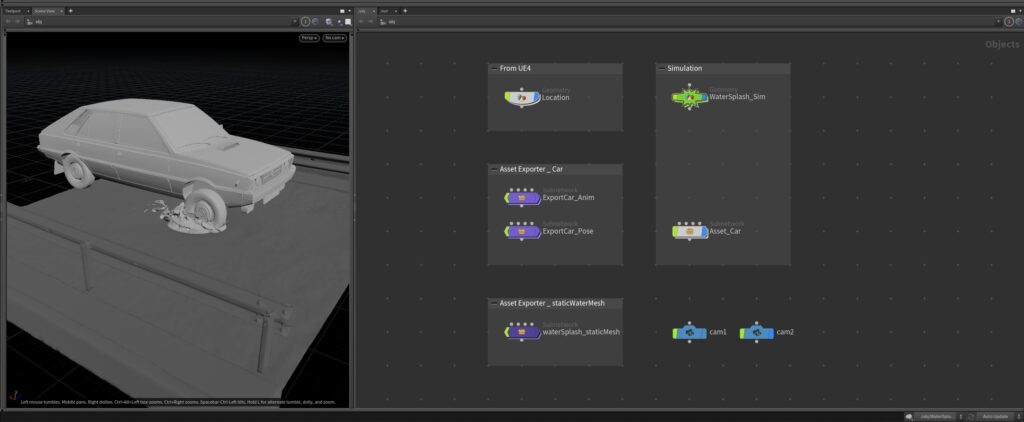
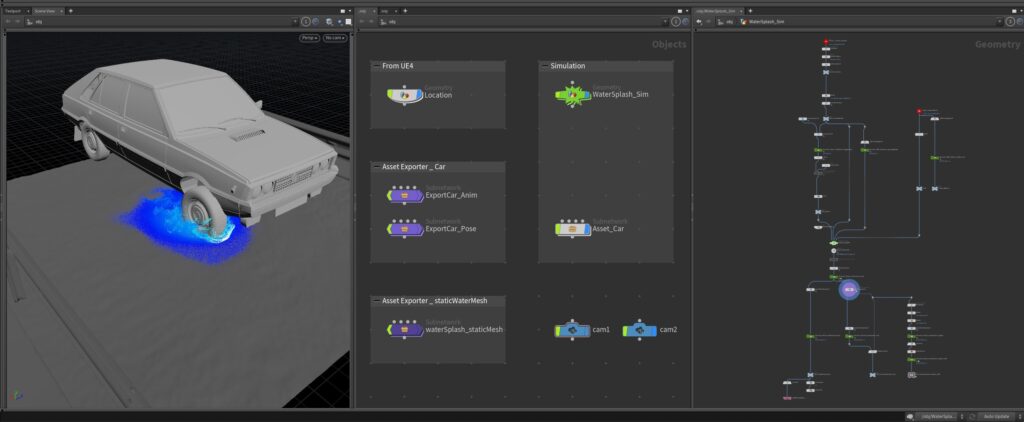
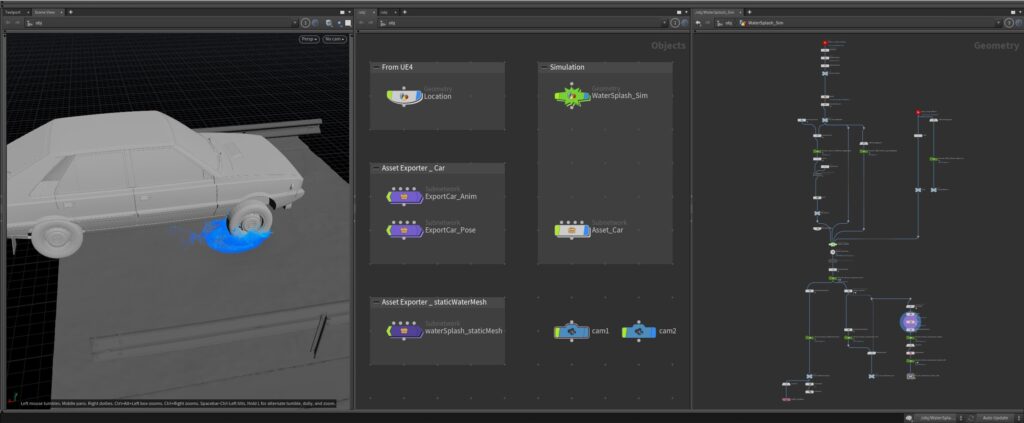
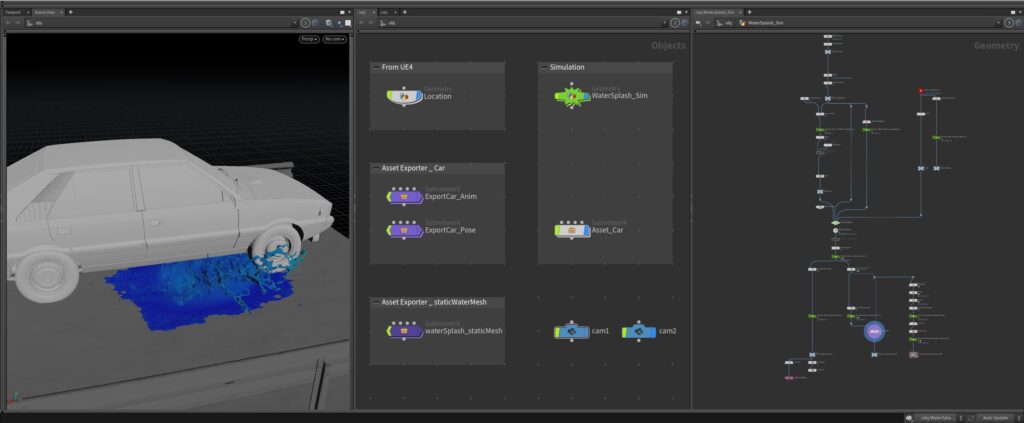
The water splash simulations were created procedurally in Houdini. Because the setup is procedural, I could generate multiple splash variations from the same system and export them as reusable assets.
At runtime, different splash variations can be selected randomly through Blueprint logic, helping reduce visible repetition. With several variations—for example, five to seven different splashes—the system can create a convincing illusion of more dynamic and varied water interaction.
This approach is relatively lightweight because most of the expensive simulation work is completed offline in Houdini, while the engine mainly handles VAT playback, flipbook rendering, timing, and variation selection.