Lovecraft Country
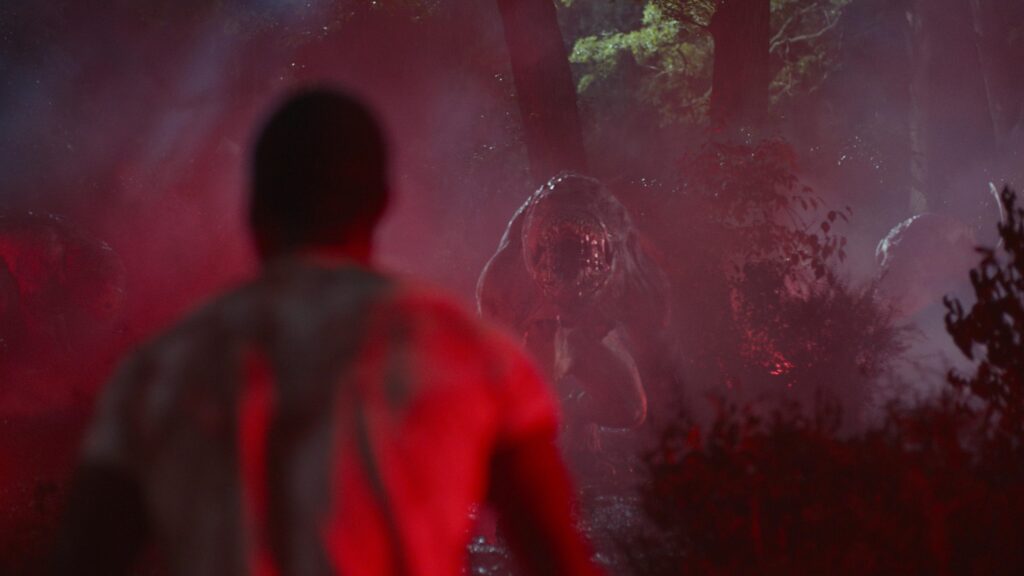
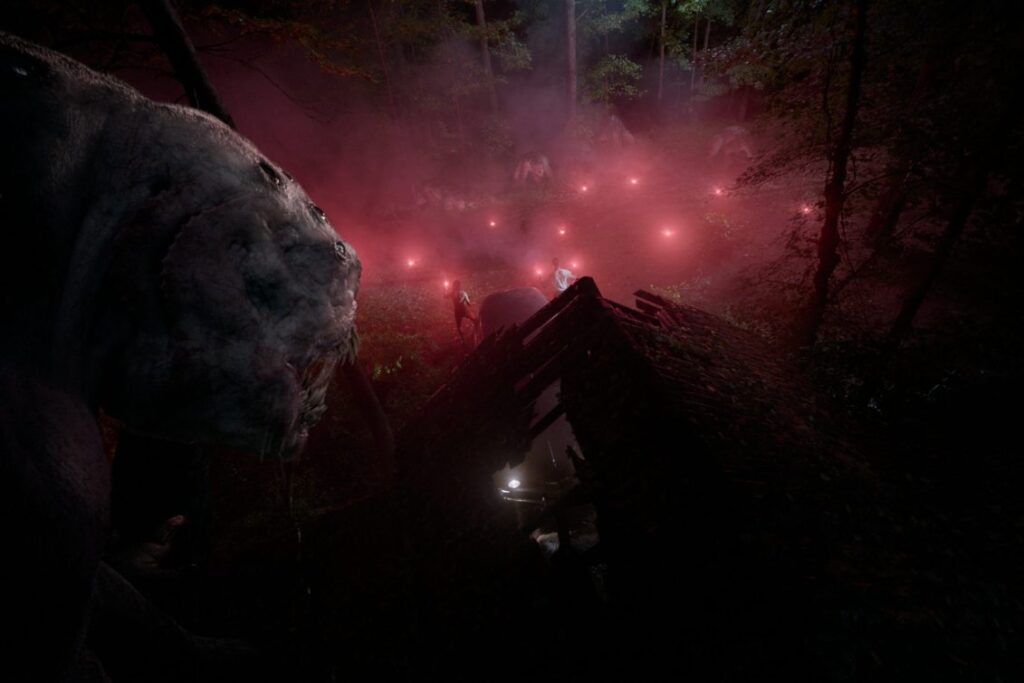
As an FX artist, this episodic project was heavily action-driven and included a large number of small but important effects within my tasks, such as debris and grain particles, splashes, blood effects, and character drool simulations.
My lighting work was also closely connected to the FX. In addition to lighting the shots, I worked on FX look development, integrating FX elements into the final image, preparing lighting and utility passes, and building slap comps in Nuke to show how the different layers should come together for iteration and dailies.
Some shots contained several types of effects at the same time, including environment FX, destruction elements, secondary particles, and character-based effects such as cloth, groom, and drool. In some cases, all of these elements had to work together within a very short action shot.
This made the lighting setup technically demanding. A shot might only appear on screen for two or three seconds, but the FX simulation could require a much longer frame range because of pre-roll, simulation settling, and dependency frames. For example, a final shot of only 50–60 frames might still require well over 100 frames pre-roll.
Other shots were challenging because of the amount of cached simulation data, render layers, and FX elements that needed to be loaded, updated, iterated, and rendered together. Managing this efficiently was important for both render time and scene stability.
My background in FX was particularly useful in these situations because it helped me understand how the simulations were built, which data was important, how the effects were expected to evolve over time, and how they should react to lighting.
I see this type of work as a specific discipline in itself—FX Lighting—where the artist needs to understand both the visual requirements of lighting and the technical behavior of complex simulations in order to integrate them convincingly and efficiently.